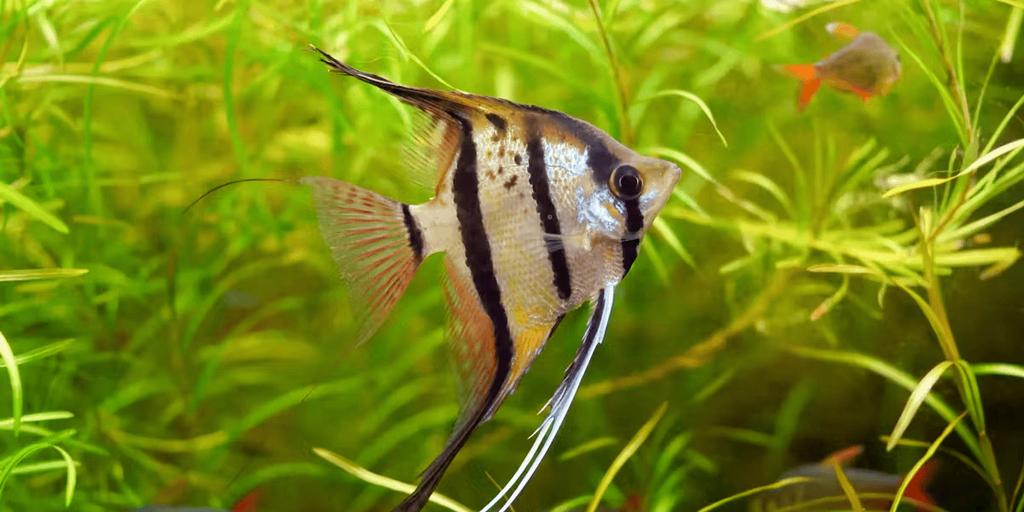
Angelfish (Pterophyllum scalare) are freshwater cichlids native to the Amazon Basin in South America, primarily found in slow-moving waters, rivers, and flooded forests. They are known for their graceful, disk-shaped bodies, long trailing fins, and distinctive vertical black stripes, which resemble the shape of an angel's wings, giving them their common name.
Angelfish are popular in the aquarium hobby for their striking appearance and elegant swimming behavior. They belong to the cichlid family Cichlidae, which includes a diverse group of species, and are known for their diverse color variations. These fish have a reputation for being territorial and may exhibit aggressive behavior, especially during breeding or when protecting their territory.
Angelfish are typically kept in pairs or small groups, but individual temperaments can vary. They are considered a challenging but rewarding species to keep due to their beauty and complex social behaviors.
Breeding Angelfish can be a fascinating endeavor, as they are known for their parental care, where both parents guard and care for their eggs and fry.
Quick Specs
Water parameters
| Temperature: | 75-82°F (24-28°C) |
| pH: | 6.0-7.5 |
| Hardness: | 3-10 dGH |
| Other: | Ammonia, Nitrites, and Nitrates should be kept at minimal levels through regular water changes and maintenance. |
| Water changes: | Regular water changes of 20-25% every 1-2 weeks help maintain water quality and promote the health of Angelfish. |
Behavior & compatibility
Schooling Behavior: Angelfish are not true schooling fish. They may tolerate others in spacious community tanks, but adults often form pairs and can become territorial, especially during breeding.Temperament: They can be territorial/aggressive, especially as they mature or pair off; fin-nipping isn’t their “main” behavior, but they can damage fins during disputes.
Centrepiece: A classic centrepiece fish—large body, tall fins, and strong presence in the mid-water column.
Prolific or Livebearing:Egg layers (not livebearers). In a community tank they aren’t typically “prolific” due to predation on eggs/fry and pair dynamics.
Swimming zone:Mostly middle (and some upper), using vertical space around plants/wood.
Interaction with Plants:Angelfish generally interact well with live plants in the aquarium. Plants provide shelter, security, and a natural environment.
Setup essentials
Lid: A tank cover is not strictly necessary, but it can prevent fish from jumping out and provide added security.Filter: A filter is preferred and highly recommended to maintain water quality by removing waste and toxins.
Substrate: Angelfish are flexible regarding substrate and can thrive with various types, including sand or smooth gravel.
Lighting: While not necessary, aquarium lighting can enhance the colors of Angelfish and promote plant growth if live plants are present in the tank.
Heater: A heater may be required to maintain a stable water temperature within the recommended range, especially in cooler environments.
Air Pump: An air pump is not necessary, but it can help improve oxygen exchange and water circulation in the tank, which is beneficial for the fish.
Feeding Regimen
Angelfish are omnivorous and should be fed a varied diet consisting of high-quality flakes or pellets designed for cichlids. Supplement their diet with occasional live or frozen foods like brine shrimp, bloodworms, or daphnia. Feed them 2-3 times a day, only what they can consume in a few minutes.Lifespan
Angelfish have an average lifespan of 8-10 years, although with proper care, they can sometimes live longer.Tank Mates
Good tank mates
Larger peaceful community fish (e.g., rummy-nose tetras, lemon tetras, Congo tetras), Corydoras, bristlenose pleco, peaceful dwarf cichlids with caution, larger rasboras.
Avoid
Fin nippers (tiger barbs, serpae tetras), very small fish that can be eaten (often neon tetras), aggressive cichlids, overly boisterous fast swimmers.
Note
Can become territorial when pairing/spawning; a taller tank and visual barriers (plants/wood) help reduce conflicts.
Common problems + quick fixes
Choose calm tankmates, add tall plants/line-of-sight breaks, and provide enough space.
Keep water stable; treat promptly for ich; avoid sudden temperature swings.
Upgrade tank size and improve diet variety (higher quality foods, regular frozen/live).
Interesting Facts
- Angelfish are known for their complex breeding behaviors, where they often select a vertical surface (such as a plant leaf) to lay their eggs.
- Both parents guard and care for the eggs and fry, fanning them with their fins and protecting them from potential threats.
- There are various color morphs of Angelfish, including silver, black, marble, and various combinations, with some selectively bred for their unique patterns and colors.
- In their natural habitat, Angelfish inhabit slow-moving waters with densely vegetated areas, where they can find food and shelter.