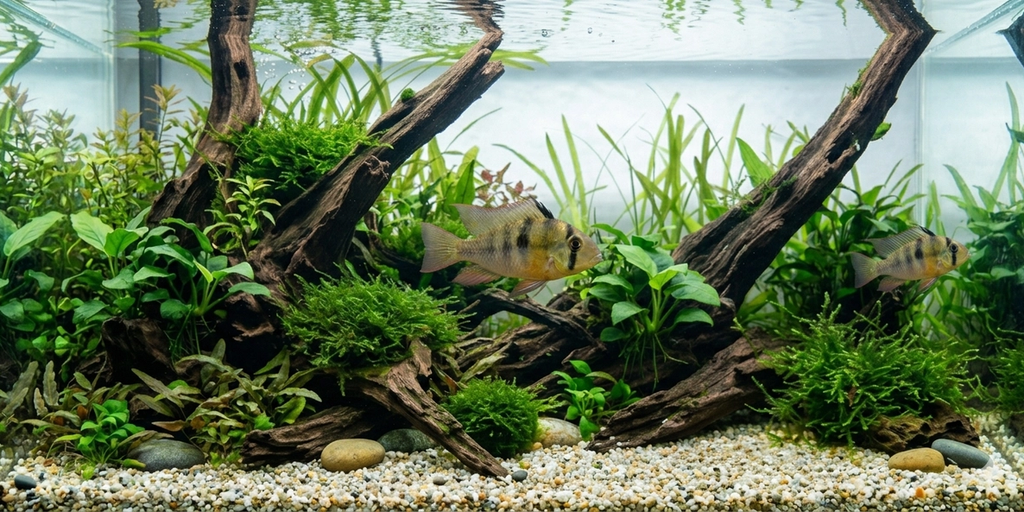
Bolivian rams are peaceful, hardy dwarf cichlids that make excellent centerpiece fish for planted community aquariums. They prefer warm, stable water (but not extreme heat), fine sand for natural foraging, and a layout with plants and hardscape that creates territories and reduces stress. Kept singly, they are usually calm; as a bonded pair, they may defend a small territory, especially during breeding. With consistent maintenance and compatible tankmates, they show great personality and attractive coloration.
Quick Specs
Water parameters
| Temperature: | 74–80°F (23–27°C). Keep it stable; they prefer warm water but not as hot as German blue rams. |
| pH: | 6.0–7.5 (slightly acidic to neutral; stability matters most). |
| Hardness: | 2–15 dGH (soft to moderately hard; adaptable if stable). |
| Other: | Ammonia and nitrites must be 0 ppm at all times. Keep nitrates low (ideally under ~20–30 ppm) with regular water changes and controlled feeding. Bolivian rams are more tolerant than German blue rams, but they still dislike sudden swings and poor water quality. Provide good oxygenation and a calm layout with hiding places and sight breaks. |
| Water changes: | Change about 25–35% weekly to keep water stable. In smaller tanks or heavier stocking, 15–25% twice weekly can improve stability and keep nitrates down. |
Behavior & compatibility
Schooling Behavior: Bolivian rams are not schooling fish. They are typically kept singly or as a bonded pair. A pair may defend a territory, especially during spawning, so provide space and visual barriers.Temperament: They are not fin-nippers, but they are territorial cichlids. A single ram is usually peaceful; a pair may defend territory and chase fish that enter it, especially during breeding. Aggression is typically mild compared to many cichlids, but it increases in cramped tanks.
Centrepiece: Bolivian rams can be a great centerpiece fish in a peaceful community tank due to their personality and cichlid behavior without extreme aggression.
Prolific or Livebearing:They are egg layers (not livebearers). Pairs may spawn on flat stones or cleaned surfaces. They are not typically prolific in community tanks because eggs/fry are often eaten unless a breeding setup is used.
Swimming zone:They are mostly lower-to-mid level fish that spend time near the substrate while foraging and defending territory, but they use the middle water too.
Interaction with Plants:Generally plant-safe. They enjoy planted tanks and use plants/hardscape as visual barriers. They may dig small pits while spawning or establishing territory, so secure plants well.
Setup essentials
Lid: A tank cover is preferred. It helps keep conditions stable and reduces evaporation; rams aren’t known as jumpers, but covers improve stability.Filter: A filter is necessary. Use stable biological filtration with gentle-to-moderate flow. Keep water clean without blasting the substrate; stability matters more than high flow.
Substrate: Fine sand is strongly preferred. Bolivian rams forage by sifting substrate, and sand supports natural behavior and reduces mouth irritation. Avoid sharp gravel.
Lighting: Special lighting isn’t required, but moderate aquarium lighting is preferred for viewing and plant growth. Provide shaded areas with plants so they feel secure.
Heater: A heater is preferred to keep a stable 23–27°C, especially in cooler rooms or during seasonal swings.
Air Pump: An air pump is preferred if surface agitation is limited, the tank is warm, or stocking is heavy. It’s not strictly required if filtration provides good oxygen exchange, but extra aeration can help overall stability.
Feeding Regimen
Feed 1–2 times per day in small portions. Offer quality pellets/granules plus frozen/live foods (bloodworms, brine shrimp, daphnia) several times per week. They can be slightly shy at first, so ensure they aren’t outcompeted by fast feeders.Lifespan
With proper care, Bolivian rams typically live about 4–6 years (sometimes longer).Tank Mates
Good tank mates
peaceful community fish (harlequin rasboras, cardinal tetras, rummy-nose tetras in suitable temps), corydoras, kuhli loaches, bristlenose pleco (space dependent), peaceful gouramis, snails.
Avoid
aggressive cichlids, fin-nippers (tiger barbs/serpae tetras), very boisterous fish, and most shrimp/shrimplets (often eaten).
Note
provide visual barriers and enough space—this keeps territorial behavior mild and reduces stress in community setups.
Common problems + quick fixes
Add more cover/plants, keep calm tankmates, reduce bright exposure, and allow time in a mature stable tank.
Feed in multiple spots, use sinking/slow foods, and ensure the ram gets its share (especially near the bottom).
Provide space and visual barriers, add caves/wood, or keep a single ram in smaller community tanks.
Increase diet variety with quality pellets plus frozen/live foods several times per week and keep nitrates low.
Interesting Facts
Bolivian rams often “sift” sand through their mouths while foraging, which is why fine sand is so beneficial. They’re generally more forgiving than German blue rams and tend to do better in typical community temperatures. When comfortable, they can become very interactive and may recognize feeding routines, often coming forward to watch activity outside the glass.