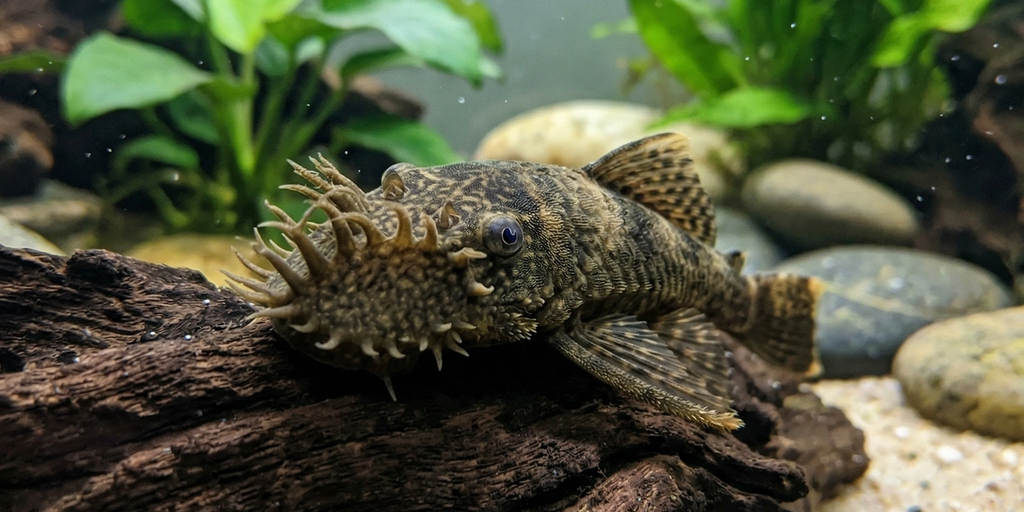
Bristlenose plecos (Ancistrus sp.) are popular freshwater “algae grazers” that stay smaller than common plecos, but still need a properly sized tank, strong filtration, and regular feeding. They spend most of their time on the bottom and on surfaces like wood, rocks, and glass, grazing and resting in caves. They are usually peaceful with community fish, but can be territorial with other plecos, especially males. Success comes from a cycled aquarium, stable parameters, driftwood, multiple hiding spots, and not relying on algae as their only food.
Quick Specs
Water parameters
| Temperature: | 73–81°F (23–27°C). Keep it stable; warmer water needs good oxygenation. |
| pH: | 6.5–7.8 (slightly acidic to slightly alkaline; stability matters most). |
| Hardness: | 2–20 dGH (adaptable; stable parameters are more important than chasing exact numbers). |
| Other: | Ammonia and nitrites must be 0 ppm at all times. Keep nitrates as low as practical (ideally under ~20–30 ppm) with regular water changes and adequate filtration. Provide driftwood (they rasp on it) and hiding spots to reduce stress. Good oxygenation is important, especially in warmer tanks or high bioload setups. |
| Water changes: | Change about 25–40% weekly to maintain water quality, especially because plecos add bioload. In smaller or heavily stocked tanks, smaller changes twice per week (e.g., 20–25% twice weekly) can help keep nitrates under control. |
Behavior & compatibility
Schooling Behavior: Bristlenose plecos are not schooling fish. They are usually kept singly, as a pair, or in a carefully planned group with enough space and multiple caves to prevent territorial disputes (especially between males).Temperament: They are generally peaceful with other fish but can be territorial with other plecos (especially males) and may chase tankmates away from caves or food. They are not fin-nippers.
Centrepiece: Bristlenose plecos are usually not a centerpiece fish; they are a functional bottom companion and algae grazer with interesting behavior, especially around driftwood and caves.
Prolific or Livebearing:They are egg layers (not livebearers). Bristlenose plecos can breed readily in captivity when conditions are right (caves and stable water), but they are not automatically ‘prolific’ unless a breeding setup is provided.
Swimming zone:They are bottom-dwelling fish that spend most of their time on surfaces, wood, glass, and decor, grazing and resting in caves.
Interaction with Plants:Generally plant-safe, but they may dislodge delicate plants while grazing or moving around. They can rasp softer leaves if underfed; hardy plants and adequate supplemental feeding prevent most issues.
Setup essentials
Lid: A tank cover is preferred. It reduces evaporation, helps keep conditions stable, and prevents rare but possible escapes.Filter: A filter is necessary. Bristlenose plecos produce waste and need stable biofiltration. Use efficient mechanical + biological filtration and ensure decent circulation without blasting the fish’s resting areas.
Substrate: Smooth sand or rounded fine gravel is preferred. Avoid sharp gravel that can irritate the underside. Provide caves and driftwood; these matter more than substrate type for comfort and territory.
Lighting: Special lighting is not required for the pleco itself, but moderate lighting is preferred for viewing and plant growth (and it can support natural algae growth). Provide shaded areas and caves so the fish can rest during brighter periods.
Heater: A heater is preferred and often necessary to keep a stable tropical range (23–27°C), especially in rooms that cool at night or during winter.
Air Pump: An air pump is preferred if your tank has warm temperatures, heavy stocking, or limited surface agitation. It’s not strictly required if the filter provides strong oxygen exchange, but extra aeration is often beneficial for bottom fish.
Feeding Regimen
Feed once daily (or small amounts twice daily) and do not rely on algae alone. Provide algae wafers and sinking pellets, plus vegetables (zucchini, cucumber, spinach, peas) several times per week. Offer occasional higher-protein foods (shrimp pellets, frozen foods) in small amounts. Remove uneaten veg after 12–24 hours to protect water quality.Lifespan
With proper care, bristlenose plecos typically live about 5–10 years.Tank Mates
Good tank mates
peaceful community fish (tetras, rasboras, danios), calm gouramis, most peaceful corydoras, snails, many shrimp (adult shrimp usually fine).
Avoid
very aggressive/territorial fish that harass bottom dwellers, large predatory fish, and multiple male plecos in smaller tanks.
Note
they are bottom grazers - ensure they get sinking foods and vegetables, and provide at least one cave per pleco to reduce territorial conflict.
Common problems + quick fixes
Supplement daily with algae wafers/sinking pellets and vegetables; ensure the pleco gets food in community tanks.
Keep one pleco per tank unless the tank is large; add multiple caves and line-of-sight breaks; avoid two males together.
Remove leftover veggies within 12–24 hours, increase filtration capacity, and raise water-change frequency.
Increase vegetable-based feeding and provide driftwood; choose sturdier plants and anchor them well.
Interesting Facts
Adult males develop distinctive facial “bristles,” which are part of why they’re called bristlenose plecos. They often prefer to be most active in the evening or when lights are low. In breeding, the male typically guards the eggs inside a cave and fans them until they hatch.