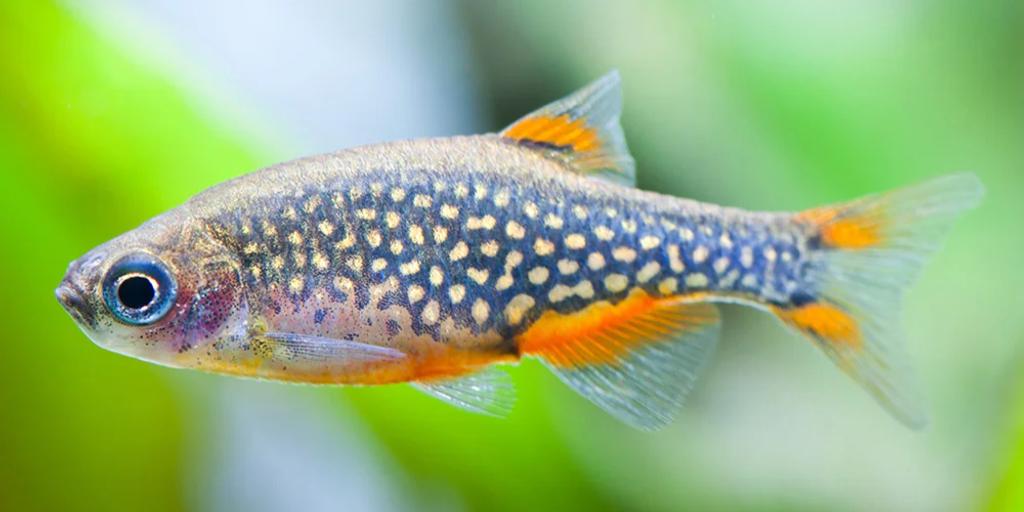
Celestial Pearl Danio (CPD), also known as Galaxy Rasbora (Danio margaritatus), is a small, striking fish with pearly “galaxy” spots and red/orange fins. It is generally peaceful but can be shy, especially in sparse tanks, and it becomes more active and visible in well-planted aquariums with plenty of cover. CPDs do best in mature, stable tanks because they can be sensitive to poor water quality and sudden parameter swings. Males may spar and display to each other, which is normal, but cramped conditions or too few fish can increase stress and chasing. They are great for planted nano/community tanks, especially when kept with calm tankmates that won’t outcompete them for food. Gentle filtration and moderate flow work best; very strong currents can make them hide. They accept small prepared foods but also thrive with frozen/live micro foods. In the right setup, they spend much of their time in the middle of the tank and create a beautiful “sparkling” display. They are egg scatterers and may spawn in moss or dense plants, but fry survival in a community tank is usually low.
Quick Specs
Water parameters
| Temperature: | 71–79°F (22–26°C), stable (they prefer slightly cooler than many tropical nano fish). |
| pH: | 6.5–7.5 (neutral to slightly alkaline; stable is key). |
| Hardness: | 5–15 dGH (moderate hardness is usually fine). |
| Other: | Ammonia and nitrites must be 0 ppm at all times; nitrates should be kept low (ideally under ~20 ppm) through regular water changes, controlled feeding, and consistent filtration. |
| Water changes: | Typically change 20–30% weekly to maintain stable water quality. In smaller tanks or heavier stocking, smaller changes twice weekly (e.g., 15–20% twice weekly) can improve stability. |
Behavior & compatibility
Schooling Behavior: Celestial pearl danios are small social fish that do best in groups, becoming calmer and more confident with more of their own kind. Celestial pearl danio (Galaxy rasbora) — Danio margaritatus should be kept in groups (minimum 6; ideally 10–12 for best display).Temperament: They are generally peaceful. Males may spar and chase a bit (display behavior), but they are not typical fin-nippers when kept in proper groups and with enough cover.
Centrepiece: PDs are not a single centerpiece fish, but a group can be a major visual highlight due to their unique patterning and fin colors.
Prolific or Livebearing:They are egg scatterers (not livebearers). They may spawn in planted tanks, but they are not typically “prolific” in community tanks because eggs/fry get eaten.
Swimming zone:CPDs primarily occupy the middle of the tank and may move to upper areas during feeding; they are not bottom-dwellers.
Interaction with Plants:Excellent with plants and strongly benefits from them. Dense plants/moss provide security, break lines of sight, and offer spawning sites.
Setup essentials
Lid: A tank cover is preferred to reduce evaporation and prevent occasional jumping, especially if they get startled.Filter: A filter is necessary. Use gentle-to-moderate filtration; avoid very strong flow that can make them hide.
Substrate: Dark substrate (sand or soil) is preferred in planted tanks. It enhances their colors and reduces stress; fine gravel also works if plant growth is good.
Lighting: Moderate lighting is preferred (mainly for plants and viewing). CPDs often feel more secure with plants and some shaded areas rather than very bright, exposed tanks.
Heater: A heater is preferred if your room temperature is unstable; not always necessary if the tank reliably stays 22–26°C. Stability matters most.
Air Pump: An air pump is not strictly necessary if the filter provides good surface movement, but gentle aeration is helpful (preferred), especially in warmer water or densely planted tanks at night.
Feeding Regimen
Feed 1–2 times per day in small portions. Preferred foods include micro pellets, small flakes, and frozen/live foods like baby brine shrimp, daphnia, cyclops, and grindal/microworms. Variety improves condition and color.Lifespan
With proper care, CPDs typically live about 3–5 years.Tank Mates
Good tank mates
small peaceful nano fish (ember tetras, chili/phoenix rasboras), small Corydoras (pygmy), otocinclus, peaceful shrimp (in planted tanks)
Avoid
large/boisterous danios, aggressive gouramis/cichlids, fin nippers, very fast competitive feeders
Note
shy-dense plants and a larger group improve confidence and color
Common problems + quick fixes
Keep a proper group and add dense plants/floating cover.
Start with frozen/live foods, then mix in micro pellets gradually.
Reduce current and create calmer zones with plants/hardscape.
Interesting Facts
Despite the “rasbora” nickname, CPDs are classified as a danio (Danio margaritatus). Their “galaxy” spots and red fins often look best over dark substrate in a planted tank with shaded areas. If males are showing off, you’ll see quick “flashing” and fin displays—this is normal social behavior in a healthy group.