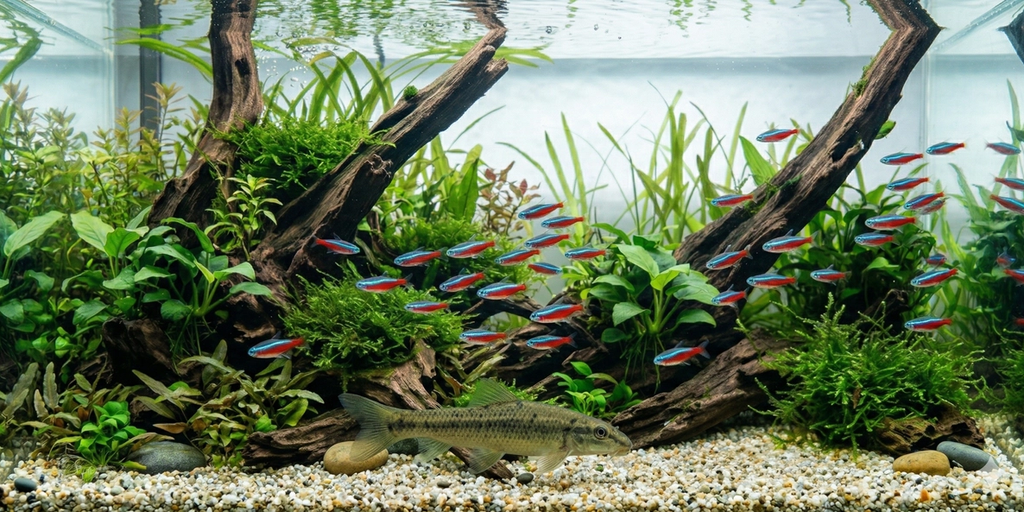
Chinese algae eaters are frequently purchased as small “cleanup fish,” but they grow large and their temperament can shift as they mature. Juveniles may graze algae actively, but adults often eat less algae and can become territorial, especially in smaller aquariums. They need a spacious tank with strong filtration, good oxygenation, and structured territories using wood/rocks and hiding areas. They should not be relied on as the only algae-control method; balanced lighting, plant growth, and maintenance are still essential.
Quick Specs
Water parameters
| Temperature: | 72–79°F (22–26°C). Keep it stable with good oxygenation and moderate current. |
| pH: | 6.0–7.5 (slightly acidic to neutral; stability matters most). |
| Hardness: | 5–15 dGH (moderate hardness is typically fine). |
| Other: | Ammonia and nitrites must be 0 ppm at all times. Keep nitrates as low as practical (ideally under ~20–30 ppm) with regular water changes and adequate filtration. CAEs are strong swimmers that benefit from good oxygen levels and some flow. As they mature, many individuals eat less algae and can become more territorial, so do not rely on them as a permanent ‘algae solution.’ |
| Water changes: | Change about 25–40% weekly to maintain stable water quality and control nitrates. In heavily stocked tanks, 15–25% twice weekly can help keep conditions stable. |
Behavior & compatibility
Schooling Behavior: Chinese algae eaters are not schooling fish. They are typically kept singly because adults can become territorial toward similar bottom dwellers and may harass tankmates, especially in cramped tanks.Temperament: Chinese algae eaters can become territorial and may harass tankmates as they mature, sometimes attaching to slower fish to rasp slime coats. This risk is much higher in smaller tanks or with slow, flat-bodied fish.
Centrepiece: They are not usually a centerpiece fish; they are more of a functional algae grazer and bottom/mid companion, though adults become quite large and noticeable.
Prolific or Livebearing:They are egg layers (not livebearers). Breeding in home aquariums is uncommon; they are not typically prolific in standard community setups.
Swimming zone:They spend time on the bottom and mid-water, grazing surfaces and swimming actively around the tank.
Interaction with Plants:Generally plant-safe. They may graze algae on leaves and hardscape. Very hungry individuals can sometimes rasp softer plant surfaces, but this is usually prevented with proper feeding.
Setup essentials
Lid: A tank cover is preferred. They are active and can jump when startled, and a cover also reduces evaporation and helps keep conditions stable.Filter: A filter is necessary. Use strong biological filtration with good mechanical capacity and moderate circulation. Clean, oxygen-rich water helps reduce stress and supports their activity level.
Substrate: Sand or smooth gravel both work well. Include rocks/wood and caves to create territories and resting spots. Avoid sharp decor that can cause scrapes in active fish.
Lighting: Special lighting isn’t required for CAEs, but moderate aquarium lighting is preferred for viewing and plant growth. Strong lighting can increase algae, which juveniles may graze more than adults.
Heater: A heater is preferred if room temperature is unstable. They do well at 22–26°C, so a heater is mainly for stability rather than high heat.
Air Pump: An air pump is preferred if surface agitation is limited, the tank runs warm, or stocking is heavy. They benefit from higher oxygen levels, especially in active setups with stronger flow.
Feeding Regimen
Feed 1–2 times per day. Do not rely on algae alone—offer quality sinking pellets, algae wafers, and vegetables (zucchini, cucumber, spinach). Add occasional protein treats (daphnia/brine shrimp) in small amounts. As they mature, they often prefer prepared foods and may graze less algae.Lifespan
With proper care, Chinese algae eaters typically live about 8–12 years.Tank Mates
Good tank mates
robust, fast-moving community fish in large tanks (some larger tetras, robust barbs with compatible temperament), larger corydoras only with caution (space/territory), bristlenose pleco with caution (territory overlap), sturdy mid-water fish that won’t be bullied.
Avoid
slow/flat-bodied fish (angelfish, discus), long-finned fish, peaceful bottom dwellers/loaches in cramped tanks, aggressive cichlids, and shrimp (often risky).
Note
many issues are solved by proper tank size and careful tankmate selection—this species is best treated as a large, potentially territorial fish rather than a small “algae cleaner.”
Common problems + quick fixes
Provide a large tank with territories and cover, keep singly, avoid similar algae eaters/loaches, and rehome if aggression escalates.
Avoid slow/flat-bodied tankmates, feed properly (don’t starve), and separate the CAE if it starts targeting other fish.
Normal with maturity—continue balanced feeding and manage algae via tank balance (light control, plants, manual removal).
Increase filtration/mechanical cleaning, reduce overfeeding, and perform 25–40% weekly water changes (or smaller changes twice weekly).
Interesting Facts
Many hobbyists confuse Chinese algae eaters with true Siamese algae eaters, but their adult behavior can be very different. A well-known issue is that some adults may attach to slower fish to rasp their slime coat, which is why tankmate choice matters. Planning for adult size (20–28 cm) prevents most long-term problems.