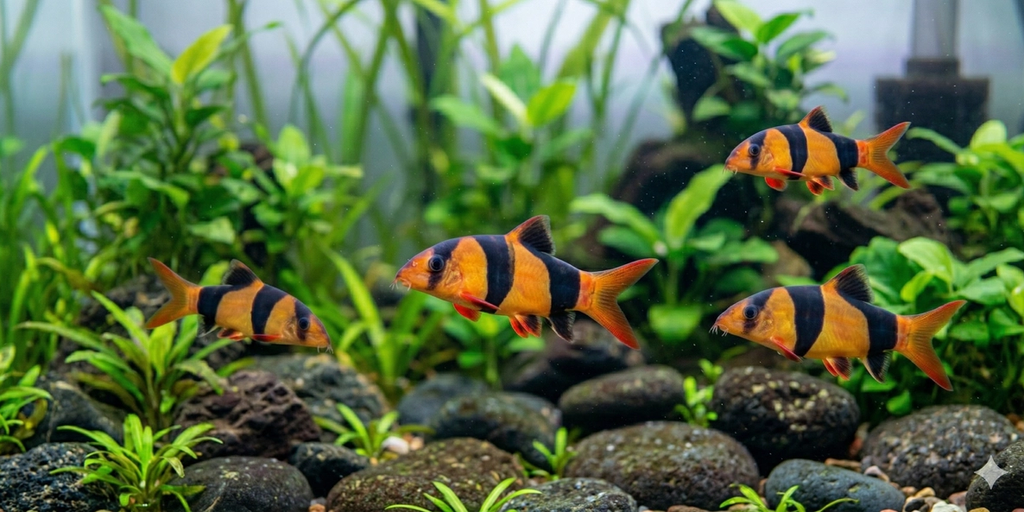
Clown loaches are iconic, social bottom fish that grow very large and live a long time, so they require long-term planning. They thrive in warm, well-oxygenated water with strong filtration, a soft sand substrate, and many caves/tubes for hiding. They should be kept in a group—this is key for confidence and natural behavior—but that also means a very large aquarium is needed as they mature. Feed a varied sinking diet and keep nitrates controlled through consistent water changes. In the right large tank, a group becomes a colorful, active feature with lots of personality.
Quick Specs
Water parameters
| Temperature: | 77–86°F (25–30°C). Keep it stable and well-oxygenated; they prefer warmer tropical conditions. |
| pH: | 6.0–7.5 (slightly acidic to neutral; stability matters most). |
| Hardness: | 2–12 dGH (soft to moderately hard; softer is preferred). |
| Other: | Ammonia and nitrites must be 0 ppm at all times. Keep nitrates as low as practical (ideally under ~20–30 ppm) with strong filtration and consistent water changes—clown loaches create a heavy bioload as they grow. They are sensitive to stress and many medications; quarantine is strongly recommended. Provide plenty of hiding spots (caves, tubes, wood) and avoid sharp decor. Warm water holds less oxygen, so good surface agitation and/or aeration is important. |
| Water changes: | Change about 30–50% weekly in large tanks to control nitrates and maintain stability. In heavily stocked or warmer setups, smaller changes twice weekly (e.g., 20–30% twice weekly) can be beneficial. Consistency is critical for long-term health. |
Behavior & compatibility
Schooling Behavior: Clown loaches are very social and should be kept in groups. In a proper group they are more confident, show natural ‘pile’ resting behavior, and display less stress. Kept singly or in pairs, they are often shy and can become stressed long-term.Temperament: Clown loaches are generally peaceful and not fin-nippers. They may be boisterous during feeding and can outcompete timid fish. They can eat snails and may bother very small shrimp.
Centrepiece: In large aquariums, clown loaches can be a major centerpiece feature due to their size, color, and behavior—especially when kept in a proper group.
Prolific or Livebearing:They are egg layers (not livebearers). Breeding in home aquariums is uncommon; they are not typically prolific without specialized conditions.
Swimming zone:They are bottom-dwelling fish that spend most of their time on or near the substrate, exploring caves and foraging, while also swimming mid-water when active.
Interaction with Plants:Generally plant-safe, but they can uproot delicate plants while digging/foraging. Hardy plants attached to wood/rocks or well-anchored rooted plants work best. They appreciate plant cover and shaded areas.
Setup essentials
Lid: A tank cover is preferred. It helps keep conditions stable, reduces evaporation, and prevents rare escapes, especially during startled behavior.Filter: A filter is necessary and should be sized generously. Clown loaches produce significant waste as they grow, so strong mechanical and biological filtration with good circulation is essential. Protect intakes if needed and ensure flow doesn’t create constant blasting currents where they rest.
Substrate: Soft sand is strongly preferred. They forage and rest on the bottom, and sand reduces the risk of mouth/barbel irritation. Avoid sharp gravel. Add smooth caves/tubes and driftwood for hiding and comfort.
Lighting: Special lighting isn’t required, but moderate lighting is preferred for viewing and for supporting plants (if used). They appreciate shaded areas and caves because they often rest during brighter periods.
Heater: A heater is necessary in most homes because clown loaches require warm tropical temperatures (25–30°C) and do poorly with cool or swingy temps.
Air Pump: An air pump is preferred and often very helpful because they are kept warm and grow large, which increases oxygen demand. If filtration already provides strong surface agitation you may not need a dedicated air pump, but extra aeration is commonly beneficial.
Feeding Regimen
Feed 1–2 times per day with a varied diet. Use sinking pellets/tablets as staples, plus frozen/live foods (bloodworms, brine shrimp, daphnia) and occasional vegetables. They are enthusiastic eaters—avoid overfeeding and keep an eye on water quality. Many will also eat snails, which can be useful but means snails may not be safe tankmates.Lifespan
With proper care and adequate space, clown loaches can live 15–25+ years.Tank Mates
Good tank mates
larger peaceful community fish that tolerate warm water (some larger tetras, robust barbs with care, peaceful gouramis, larger rainbowfish), other compatible loaches (space dependent), bristlenose pleco (in very large tanks), sturdy catfish (space dependent).
Avoid
small timid fish that will be outcompeted, aggressive cichlids/predators, fin-nippers, and snails (often eaten). Shrimp are often risky, especially small shrimp/shrimplets.
Note
plan stocking around their adult size and bioload—clown loaches are best in large, mature aquariums with strong filtration and lots of cover.
Common problems + quick fixes
Plan for an adult-sized tank from the start (large footprint), upgrade early, and keep an appropriate group size.
Quarantine new fish, keep temperature stable, improve water quality, increase aeration, and use loach-safe treatment dosing carefully.
Increase group size, add more caves/cover, reduce aggressive tankmates, and ensure warm stable water.
Increase filtration/mechanical cleaning, reduce overfeeding, and do consistent 30–50% weekly water changes (or smaller changes twice weekly).
Interesting Facts
Clown loaches often rest in “piles” together, which can look alarming but is normal social behavior. They can make audible clicking sounds during feeding or excitement. Their orange-and-black pattern becomes even more striking as they grow, but many are sold small—owners are often surprised by their adult size and lifespan.