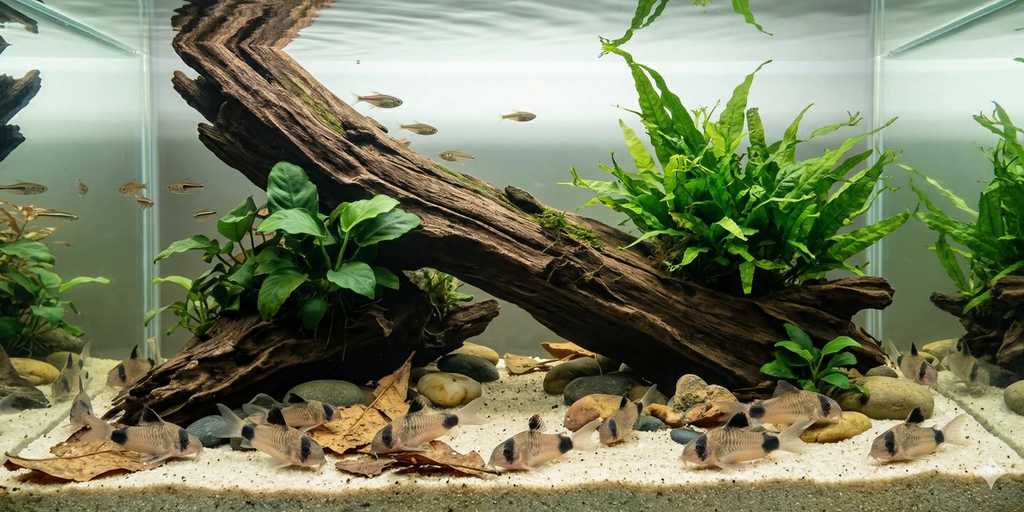
Panda corydoras are small, peaceful bottom fish that thrive in groups in a mature, clean aquarium. They need soft sand to protect their barbels and benefit from planted layouts with shaded resting spots. Their success depends on stable water quality, gentle flow, and consistent maintenance—especially regular water changes and keeping the substrate clean. In a proper group, they are active foragers and a great “bottom companion” for calm community tanks.
Quick Specs
Water parameters
| Temperature: | 68–77°F (20–25°C). Panda corys are comfortable in the cool-to-mid range; keep it stable and well-oxygenated. |
| pH: | 6.0–7.5 (slightly acidic to neutral). |
| Hardness: | 2–12 dGH (soft to moderately hard). |
| Other: | Ammonia and nitrites must be 0 ppm at all times. Keep nitrates low (ideally under ~20–30 ppm). Panda corys are sensitive to dirty substrate and sudden swings, so prioritize consistent water changes, gentle substrate cleaning, and strong biological filtration. Good oxygenation is important, especially at warmer temperatures. |
| Water changes: | Change about 25–35% weekly to keep water stable and the substrate clean. In smaller tanks or heavier stocking, 15–25% twice weekly can be better than one larger change. Regular light substrate cleaning helps prevent barbel irritation and infections. |
Behavior & compatibility
Schooling Behavior: Panda corydoras are social shoaling fish and should be kept in groups. In a proper group they are more active, forage confidently, and show natural behavior. Small numbers often lead to hiding and stress.Temperament: Panda corydoras are peaceful, not aggressive, and not fin-nippers. Most problems come from being kept in too small a group, rough substrate, or poor water quality.
Centrepiece: Panda corydoras are not typically a centerpiece fish; they are a charming bottom-companion group that adds constant activity and personality.
Prolific or Livebearing:They are egg layers (not livebearers). They can breed in captivity, but they are not typically prolific in a community tank unless breeding is intentionally managed.
Swimming zone:Panda corydoras are bottom-dwelling fish that spend most of their time foraging along the substrate and resting on the bottom, occasionally darting mid-water.
Interaction with Plants:Panda corydoras are plant-safe and do well in planted tanks. Plants provide cover and reduce stress, and the fish will often rest under leaves or among stems. They may uproot delicate new plantings while foraging, so secure plants well.
Setup essentials
Lid: A tank cover is preferred. It reduces evaporation, keeps temperature more stable, and prevents accidental jumps, especially if fish are startled.Filter: A filter is necessary. Panda corys do best with stable biofiltration and clean water. Use gentle-to-moderate flow (sponge filter or a baffled HOB/canister return) so they can forage comfortably while maintaining strong biological capacity.
Substrate: Soft sand is strongly preferred. Avoid sharp gravel to protect their barbels. Fine sand lets them forage naturally and reduces the risk of barbel erosion.
Lighting: Special lighting is not required for panda corys, but moderate lighting is preferred for viewing and for supporting live plants. Provide shaded areas with plants/hardscape so they feel secure.
Heater: A heater is preferred if room temperature is unstable. Panda corys do well at 20–25°C, so a heater is often used to keep the temperature steady rather than to make it warm.
Air Pump: An air pump is preferred because panda corys benefit from higher oxygen levels. If your filter already creates strong surface agitation you may not need it, but extra aeration is helpful in warm water, dense planting, or higher stocking.
Feeding Regimen
Feed 1–2 times per day. Use sinking micro pellets/tablets as the staple, plus frozen foods like bloodworms, daphnia, and brine shrimp as variety a few times per week. Don’t rely on leftovers—ensure food reaches the bottom and that the whole group eats.Lifespan
With proper care, panda corydoras typically live about 5–10 years.Tank Mates
Good tank mates
small peaceful community fish (e.g., ember tetras, small rasboras, peaceful danios), other small corydoras species (with adequate space), calm dwarf cichlids (carefully), many shrimp/snails.
Avoid
aggressive fish, large predators, fin-nippers (barbs), very large/boisterous fish that stress them, and tanks with sharp gravel.
Note
they are bottom feeders-ensure they get sinking food and aren’t outcompeted by fast feeders.
Common problems + quick fixes
Switch to soft sand, keep substrate clean with gentle siphoning, improve water quality, and avoid sharp gravel.
Increase group size (aim 6+), add more cover/plants, reduce aggressive tankmates, and keep flow gentle.
Quarantine new fish, ensure a mature cycled tank, keep ammonia/nitrite at 0, and maintain stable temperature/parameters.
Use sinking foods, feed after lights dim, reduce competition from fast feeders, and offer frozen foods for appetite.
Interesting Facts
Panda corydoras are named for their black eye patches and markings that resemble a panda. They often “shuffle” through sand using their barbels to locate food, which is why substrate choice is so important. When comfortable, they show playful group behavior and may even spawn after large water changes or seasonal-like shifts.