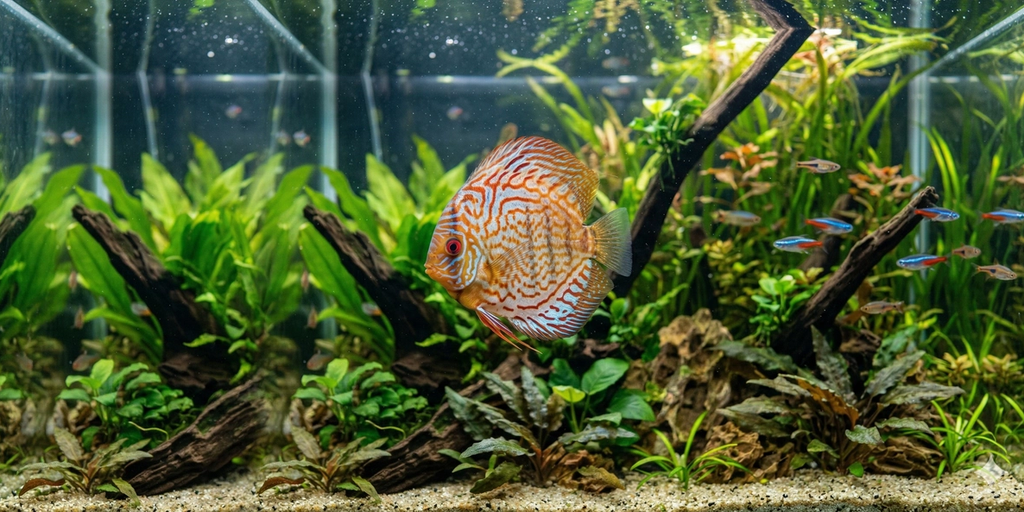
Discus are iconic, round-bodied cichlids that thrive in large, warm, very stable aquariums. They should be kept in a group to reduce stress and spread out dominance behavior, which means planning for a big tank with strong filtration and frequent water changes. They do best with low nitrates, gentle-to-moderate flow, calm tankmates, and consistent feeding routines. Because they are kept at higher temperatures, good oxygenation and careful maintenance are essential. When their needs are met, a group of discus becomes an extraordinary centerpiece display.
Quick Specs
Water parameters
| Temperature: | 82–86°F (28–30°C). Discus prefer consistently warm water; warm tanks need strong oxygenation and very stable maintenance. |
| pH: | 6.0–7.0 (slightly acidic to neutral; stability matters most). |
| Hardness: | 1–8 dGH (soft to moderately soft; softer is preferred). |
| Other: | Ammonia and nitrites must be 0 ppm at all times. Keep nitrates very low (ideally under ~10–20 ppm) with frequent water changes and careful feeding. Discus are sensitive to sudden parameter swings and to deteriorating water quality, especially at high temperatures. Warm water holds less oxygen, so strong surface agitation and/or aeration is important. Quarantine new fish and maintain stable conditions to reduce disease risk. |
| Water changes: | Change about 30–50% of the water at least weekly. Many discus keepers prefer more frequent changes (e.g., 25–40% 2–3 times per week) to keep nitrates very low and maintain stability, especially for growing fish or heavy feeding. |
Behavior & compatibility
Schooling Behavior: Discus are not schooling fish in the tetra sense, but they are social and should be kept in groups. Groups reduce stress and spread dominance behavior; keeping too few often leads to bullying and a ‘runt’ that doesn’t eat well.Temperament: Discus are generally peaceful but have a dominance hierarchy within the group. Aggression is usually mild (chasing/pecking), but bullying can become serious in small groups or cramped tanks. They are not fin-nippers.
Centrepiece: Discus are classic centerpiece fish due to their size, shape, and coloration, especially in larger, calm, warm community aquariums.
Prolific or Livebearing:They are egg layers (not livebearers). Discus can breed in captivity as pairs, but it requires stable conditions and is not typically ‘prolific’ in community tanks without a dedicated breeding setup.
Swimming zone:Discus mostly occupy the middle water column and move to the upper level during feeding. They are not bottom-dwellers.
Interaction with Plants:Generally plant-safe. Discus can do well in planted tanks, but plants can complicate cleaning and may limit how aggressively you can vacuum waste. Choose plants that tolerate warm water (28–30°C) and keep circulation and maintenance strong.
Setup essentials
Lid: A tank cover is preferred. It reduces evaporation, helps keep temperature stable, and prevents rare jumping when startled.Filter: A filter is necessary and should be sized generously. Discus need stable biological filtration and clean water; strong mechanical filtration helps manage heavy feeding. Avoid blasting current—provide gentle-to-moderate flow with calm zones.
Substrate: Bare-bottom is common for easiest cleaning (especially for growing fish). If using substrate, fine sand is preferred for a natural look and gentle bottom behavior. Avoid sharp gravel and keep the bottom very clean.
Lighting: Special lighting isn’t required, but moderate aquarium lighting is preferred for viewing and plant growth (if planted). Discus often prefer a calmer, less harshly lit environment with shaded areas.
Heater: A heater is necessary in most homes because discus require consistently warm temperatures (28–30°C). Redundancy (two heaters) is often used in large tanks for safety.
Air Pump: An air pump is preferred and often strongly recommended because discus are kept warm, where oxygen is lower. If filtration already provides strong surface agitation you may not need a dedicated air pump, but extra aeration is commonly beneficial.
Feeding Regimen
Feed 2–4 times per day in small portions, especially for growing discus. Use high-quality pellets/granules formulated for discus plus frozen foods (e.g., brine shrimp, bloodworms) as variety. Remove leftovers to protect water quality. Discus can be slow, picky feeders—ensure all fish eat, and watch for bullied individuals that miss meals.Lifespan
With proper care, discus typically live about 10–15 years (sometimes longer).Tank Mates
Good tank mates
calm warm-water schooling fish (cardinal tetras, rummy-nose tetras in warm setups), peaceful bottom companions that tolerate warmth (choose carefully), bristlenose pleco only if compatible and tank is large, snails (varies), some peaceful dwarf cichlids with caution.
Avoid
aggressive fish, fin-nippers (tiger barbs/serpae tetras), very boisterous fast swimmers, cold-water species, and most shrimp/shrimplets (often eaten; also temperature mismatch).
Note
prioritize tankmates that tolerate 28–30°C and won’t outcompete discus at feeding time; stability and calmness are key.
Common problems + quick fixes
Keep a proper group size (5–8+), provide a large tank, rearrange decor to reset dominance, and ensure multiple feeding spots.
Use a mature tank, keep ammonia/nitrite at 0, maintain very low nitrates with frequent water changes, and keep temperature stable.
Increase surface agitation, add an air stone, avoid overcrowding, and keep the tank very clean.
Offer high-quality pellets plus varied frozen foods, feed smaller portions more often, and separate bullied fish if necessary.
Interesting Facts
Discus are often called the “king of the aquarium” because of their size, shape, and coloration. They form a social hierarchy, and the group dynamic improves noticeably in larger groups and larger tanks. Many serious discus keepers use bare-bottom tanks for easier cleaning and to maintain very low nitrates, especially when raising juveniles.