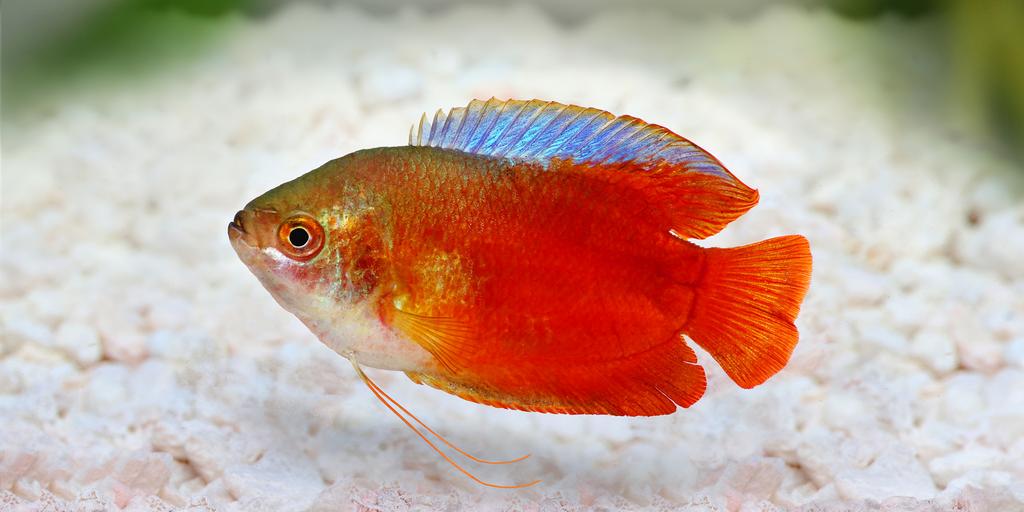
Dwarf Gouramis (Trichogaster lalius) are small, vibrant, and popular freshwater fish native to South Asia, particularly India and Bangladesh.
They belong to the family Osphronemidae and are characterized by their colorful and intricate patterns, making them a sought-after species in the aquarium hobby.
Dwarf Gouramis are known for their peaceful nature, making them suitable for community aquariums with other non-aggressive fish.
Males and females of this species exhibit distinct coloration and fin differences, with males often displaying more vibrant colors.
These fish have a labyrinth organ, allowing them to breathe air from the water's surface, which is an adaptation for their native habitat, which often includes oxygen-poor waters.
Dwarf Gouramis are not schooling fish but can be kept individually or in pairs.
They are relatively hardy and adaptable, making them suitable for both beginner and experienced aquarists.
Various color morphs of Dwarf Gouramis are available in the aquarium trade, including the popular Flame Gourami and Powder Blue Gourami.
Quick Specs
Water parameters
| Temperature: | 77-82°F (25-28°C) |
| pH: | 6.0-7.5 |
| Hardness: | 4-10 dGH |
| Other: | Ammonia, Nitrites, and Nitrates should be kept at minimal levels through regular water changes and maintenance. |
| Water changes: | Regular water changes of 20-25% every 1-2 weeks help maintain water quality and promote the health of Dwarf Gouramis. |
Behavior & compatibility
Schooling Behavior: Dwarf gouramis are not schooling fish. They do best kept singly or as a calm pair in a well-planted tank, and males can be territorial toward similar fish.Temperament: Can be territorial (especially males), but they are not typically categorized as fin-nippers.
Centrepiece: A single dwarf gourami (or calm pair) is often used as a true centrepiece due to color and “personality” in the upper/middle zones.
Prolific or Livebearing:They are bubble-nest builders (egg layers), not livebearers; not usually “prolific” in community setups.
Swimming zone:They spend most time in the middle and upper zones (surface-oriented labyrinth fish).
Interaction with Plants:Dwarf Gouramis typically interact well with live plants in the aquarium. Plants provide shelter and create a natural environment.
Setup essentials
Lid: A tank cover is not strictly necessary, but it can prevent fish from jumping out and provide added security.Filter: A filter is preferred and highly recommended to maintain water quality by removing waste and toxins.
Substrate: Dwarf Gouramis are flexible regarding substrate and can thrive with various types, including sand or smooth gravel.
Lighting: While not necessary, aquarium lighting can enhance the colors of Dwarf Gouramis and promote plant growth if live plants are present in the tank.
Heater: A heater may be required to maintain a stable water temperature within the recommended range, especially in cooler environments.
Air Pump: An air pump is not typically necessary, but it can improve oxygen exchange and water circulation in the tank, benefiting both Dwarf Gouramis and other fish.
Feeding Regimen
Dwarf Gouramis are omnivorous and should be fed a varied diet consisting of high-quality flakes or pellets designed for small tropical fish. Supplement their diet with occasional live or frozen foods like brine shrimp or daphnia. Feed them 2-3 times a day, only what they can consume in a few minutes.Lifespan
Dwarf Gouramis have an average lifespan of 4-6 years, although with proper care, some individuals can live longer.Tank Mates
Good tank mates
Peaceful community fish (tetras, rasboras), Corydoras, otocinclus, snails; calm setups with plants and hiding places.
Avoid
Fin nippers, aggressive gouramis/cichlids, very boisterous fish, and multiple males in small tanks.
Note
Labyrinth fish—prefers calm water and surface access. Floating plants and gentle flow help.
Common problems + quick fixes
Use floating plants and gentle flow; add hiding zones.
Keep one male; provide line-of-sight breaks.
Buy from reputable sources, quarantine, and maintain excellent water quality.
Interesting Facts
- The "dwarf" in their name refers to their smaller size compared to some other Gourami species.
- Dwarf Gouramis are known for their vibrant colors, with males often displaying more intense hues to attract females.
- They possess a labyrinth organ, allowing them to gulp air from the water's surface, which is useful in low-oxygen environments.
- In the wild, they inhabit slow-moving or stagnant waters, such as rice paddies and ponds, where oxygen levels can vary.