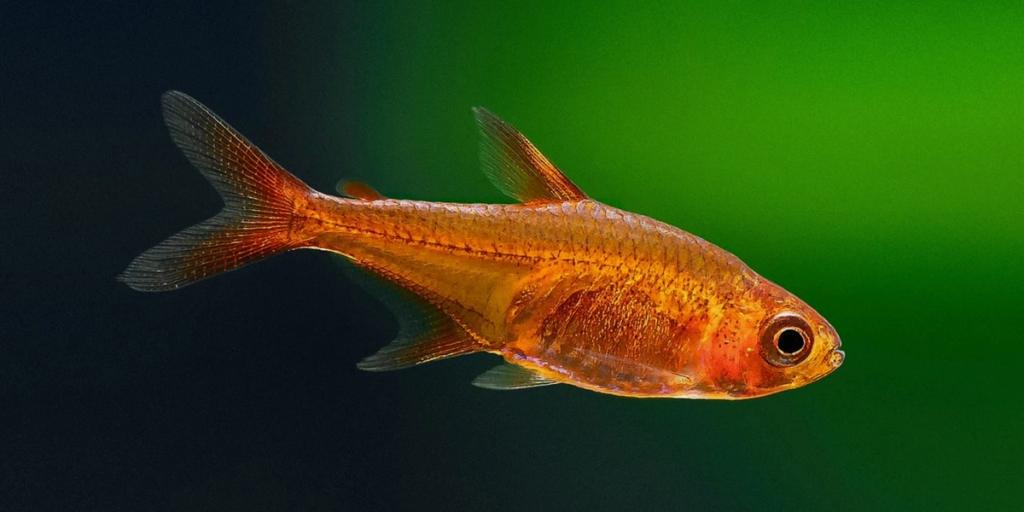
Ember Tetra (Hyphessobrycon amandae) is a tiny, peaceful schooling fish known for its warm orange “ember” color and calm behavior. It’s an excellent choice for planted nano and community aquariums because it stays small and is generally easy to keep when water quality is stable. Ember tetras feel safest in groups, and their color and activity improve noticeably when kept in a proper school. They prefer gentle flow, plenty of plants, and a darker substrate, which helps them look brighter and reduces stress. A mature, cycled tank is important, because small fish are sensitive to ammonia and nitrite spikes. They are not aggressive and usually coexist well with other peaceful nano fish, snails, and many shrimp. Because they are tiny, they can be outcompeted for food by larger or faster fish, so choose tankmates carefully. With consistent maintenance, they become an active mid-water “feature school” that adds color and movement without causing problems. Overall, Ember Tetras are a reliable option for beginners who want a calm, colorful planted aquarium.
Quick Specs
Water parameters
| Temperature: | 73–82°F (23–28°C), stable and warm. |
| pH: | 5.5–7.5 (slightly acidic to neutral; stability matters most). |
| Hardness: | 1–12 dGH (soft to moderately hard; softer is preferred). |
| Other: | Ammonia and nitrites must be 0 ppm at all times; nitrates should be kept low (ideally under ~20 ppm) with regular water changes, controlled feeding, and consistent filtration. |
| Water changes: | Typically change 20–30% weekly to maintain stable water quality. In small tanks or with heavier stocking, smaller changes twice per week (e.g., 15–20% twice weekly) can be even better. |
Behavior & compatibility
Schooling Behavior: Ember tetras are schooling fish that feel secure in groups; larger schools bring better color and more natural shoaling. Ember Tetra (Hyphessobrycon amandae) should be kept in groups (minimum 8; ideally 10–12 for best display).Temperament: : Ember Tetras are peaceful, not aggressive, and not typically fin-nippers.
Centrepiece: Ember Tetras are generally not a single “centerpiece” fish; instead, a larger school becomes the visual feature through color and synchronized movement.
Prolific or Livebearing:They are egg scatterers (not livebearers). They may spawn occasionally in mature planted tanks, but they are not typically prolific in community setups.
Swimming zone:Ember Tetras mainly occupy the middle water column, sometimes moving into upper areas during feeding.
Interaction with Plants:Ember Tetras are excellent with live plants and do not damage them. Plants provide cover, reduce stress, and help them display better schooling behavior.
Setup essentials
Lid: A tank cover is preferred. They don’t jump as much as some species, but a cover helps prevent accidental escapes and improves temperature stability.Filter: A filter is necessary. Use gentle filtration (sponge filter or low-flow HOB) to keep water clean without stressing the fish.
Substrate: Dark, fine substrate (sand or planted soil) is preferred. Dark substrate enhances their orange coloration and helps them feel secure; leaf litter is optional.
Lighting: Moderate aquarium lighting is preferred—mainly to support live plants and viewing. They don’t require strong light; floating plants can help diffuse brightness.
Heater: A heater is preferred and can be necessary if room temperature does not reliably keep the aquarium within 23–28°C. Stable temperature is important.
Air Pump: An air pump is not strictly necessary if the filter provides good surface agitation, but gentle aeration is helpful (preferred) in warm tanks, very still water, or heavily planted setups at night.
Feeding Regimen
Feed 1–2 times per day in small portions. Preferred foods include small flakes, micro pellets, and frozen/live options like baby brine shrimp, daphnia, and cyclops. Ensure food pieces are small enough for their mouths.Lifespan
With proper care, Ember Tetras typically live about 3–5 years.Tank Mates
Good tank mates
Other peaceful nano fish (rasboras), pygmy Corydoras, otocinclus, shrimp/snails—best in planted community tanks.
Avoid
Aggressive fish, fin nippers, and large fast feeders that outcompete them for food.
Note
Schooling fish—bigger groups and plants improve confidence and color.
Common problems + quick fixes
Keep a proper school and add plants; reduce stress and harsh lighting.
Increase group size and avoid cramped layouts.
Ensure the tank is cycled and maintain steady weekly water changes.
Interesting Facts
Their orange coloration often intensifies in planted tanks with darker substrate and subdued lighting. A larger school looks dramatically better than a small group—both in behavior and in “glowing ember” effect. They’re often used as a peaceful highlight fish in nano aquascapes because they stay small and don’t bother plants.