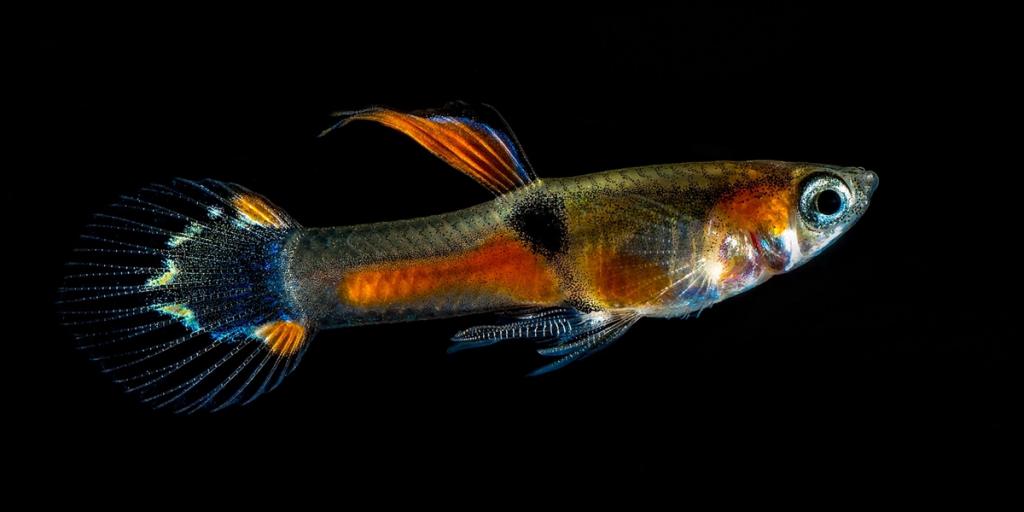
Endler's Livebearer (Poecilia wingei) is a small, colorful, and popular freshwater fish native to Venezuela, specifically the Laguna de Patos and associated waters. They belong to the family Poeciliidae and are closely related to guppies, often interbreeding with them in the wild.
These fish are named after Dr. John Endler, an ecologist who extensively studied their behavior and distribution.
Endler's Livebearers are known for their striking colors, vibrant patterns, and active swimming behavior, making them a favorite among aquarium enthusiasts. They are relatively easy to care for and are suitable for both beginners and experienced aquarists.
In the wild, Endler's Livebearers inhabit slow-moving or still waters with dense vegetation, where they feed on small invertebrates. They are livebearers, meaning they give birth to live fry rather than laying eggs.
Quick Specs
Water parameters
| Temperature: | 72-82°F (22-28°C) |
| pH: | 6.5-8.0 |
| Hardness: | 5-20 dGH |
| Other: | Ammonia, Nitrites, and Nitrates should be kept at minimal levels through regular water changes and maintenance. |
| Water changes: | Regular water changes of 20-25% every 1-2 weeks help maintain water quality and promote the health of Endler's Livebearers. |
Behavior & compatibility
Schooling Behavior: Endler’s livebearers are social fish that prefer groups; they don't school tightly, but groups reduce stress and keep them active. Endler's Livebearer (Poecilia wingei) should be kept in groups (minimum 6; ideally 8–10 for best display).Temperament: Mostly peaceful; males may posture/chase during courtship, but they are not typically fin-nippers.
Centrepiece: Endlers can be a centerpiece in nano/community tanks because males are very colorful and constantly on display, especially in a males-only group.
Prolific or Livebearing:Endler's Livebearers are prolific livebearers, producing offspring frequently when conditions are suitable.
Swimming zone:They primarily occupy the mid to upper water levels and are not considered bottom-dwelling fish.
Interaction with Plants:Endler's Livebearers typically interact well with live or artificial plants in the aquarium. Plants provide shelter and a natural environment.
Setup essentials
Lid: A tank cover is not strictly necessary, but it can prevent fish from jumping out and provide added security.Filter: While not absolutely necessary, a filter is recommended to maintain water quality by removing waste and toxins.
Substrate: They are flexible regarding substrate and can thrive with various types, including sand, fine gravel, or planted substrates.
Lighting: While not necessary, aquarium lighting can enhance the colors of Endler's Livebearers and promote plant growth if live plants are present in the tank.
Heater: A heater may be required to maintain a stable water temperature within the recommended range, especially in cooler environments.
Air Pump: An air pump is not typically necessary, but it can improve oxygen exchange and water circulation, particularly in tanks with limited surface agitation.
Feeding Regimen
They are omnivorous and should be fed a balanced diet consisting of high-quality flakes or pellets designed for small tropical fish. Supplement their diet with occasional live or frozen foods like brine shrimp or daphnia. Feed them 2-3 times a day, only what they can consume in a few minutes.Lifespan
Endler's Livebearers have an average lifespan of 2-3 years, although with proper care, some individuals can live longer.Tank Mates
Good tank mates
Peaceful community fish (small tetras/rasboras), Corydoras, otocinclus, snails—especially in planted tanks.
Avoid
Aggressive fish, fin nippers, large fish that may eat adults, and most fish that will hunt fry if you want fry survival.
Note
Very prolific breeders; provide plant cover if you want fry to survive, or plan population control.
Common problems + quick fixes
Keep males-only for easiest care, or have a fry plan.
Quarantine new fish; improve diet; treat parasites if symptoms persist.
Add plants and keep balanced ratios if breeding (more females than males).
Interesting Facts
- Endler's Livebearers are often hybridized with guppies, leading to unique and colorful strains known as "Endler-Guppies" or "Endler's Guppies."
- These fish are named after Dr. John Endler, who conducted extensive research on their natural behavior and distribution in the wild.
- They are sometimes called "the orchid of the fish world" due to their striking and varied coloration, which has led to the development of numerous selectively bred strains.