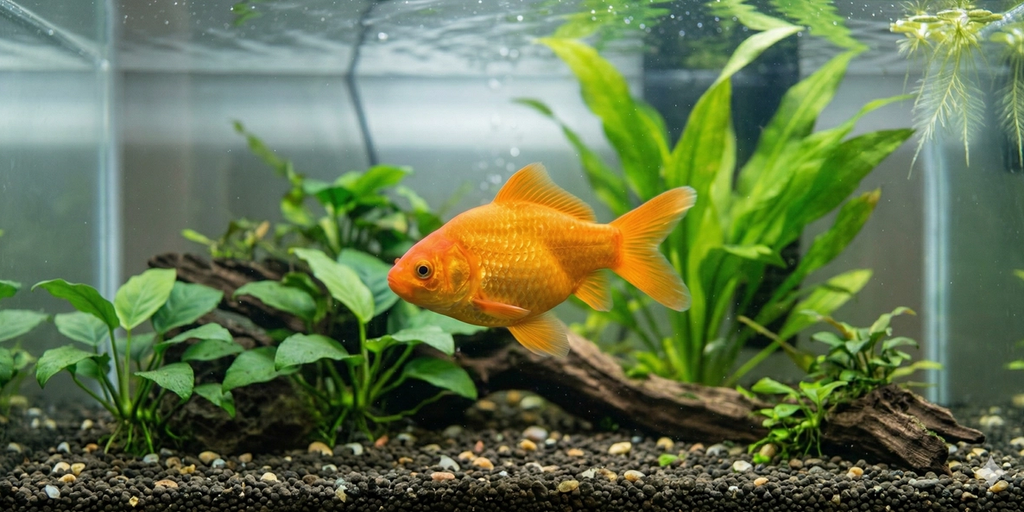
Common goldfish are classic cool-water aquarium fish that grow much larger than most people expect. They are active, social, and produce heavy waste, which is why tank size and filtration matter more than “special” water chemistry. A large aquarium with strong filtration, good oxygenation, and consistent water changes is the foundation of success. Goldfish do best in species-only setups or with carefully chosen compatible goldfish, and they should not be mixed with tropical fish that require warmer temperatures.
Quick Specs
Water parameters
| Temperature: | 65–75°F (18–24°C). Common goldfish are cool-water fish; stability and high oxygen matter more than warm temperatures. |
| pH: | 7.0–8.4 (neutral to alkaline). |
| Hardness: | 5–19 dGH (moderate to hard water is typically fine). |
| Other: | Ammonia and nitrites must be 0 ppm at all times. Keep nitrates as low as practical (ideally under ~20–40 ppm) with strong filtration, controlled feeding, and regular water changes. Goldfish are heavy waste-producers, so stable biofiltration and frequent maintenance are key. |
| Water changes: | Because goldfish produce a lot of waste, change about 30–50% of the water weekly. In smaller tanks or higher stocking, more frequent changes (e.g., 25–30% twice weekly) help control nitrates and keep oxygen levels high. |
Behavior & compatibility
Schooling Behavior: Common goldfish are not true schooling fish, but they are social and often do well in pairs or groups when given enough space. Keep only compatible goldfish types together and avoid overcrowding.Temperament: Common goldfish are generally peaceful and not fin-nippers. Most issues come from overcrowding, incompatible tankmates, or mixing fast single-tail types with slow fancy types.
Centrepiece: Common goldfish are often the centerpiece of a cool-water aquarium due to their size, activity, and recognizable appearance.
Prolific or Livebearing:Goldfish are egg layers (not livebearers). They may spawn in suitable conditions, but they are not typically ‘prolific’ in standard home aquariums because eggs/fry are usually eaten unless separated.
Swimming zone:Goldfish use all levels of the aquarium and spend a lot of time foraging along the bottom, especially at feeding time.
Interaction with Plants:Goldfish often nibble soft plants and can uproot decorations while foraging. Hardy plants (e.g., Anubias, Java fern) attached to rocks/wood are more likely to survive, and floating plants may be eaten.
Setup essentials
Lid: A tank cover is preferred. It reduces evaporation, helps keep debris out, and can prevent occasional jumping or splashing (goldfish can startle).Filter: A filter is necessary and should be sized generously (often rated above the tank volume). Goldfish are messy, so strong mechanical and biological filtration with good surface agitation is essential.
Substrate: Smooth sand or a bare-bottom tank is preferred. Avoid small gravel that can be swallowed and cause choking or intestinal blockage. If using substrate, choose rounded and easy-to-clean materials.
Lighting: Special lighting is not required for goldfish, but moderate aquarium lighting is preferred for viewing and for growing hardy plants (if used). Avoid extreme lighting that causes excess algae without plant balance.
Heater: A heater is generally not needed. Use one only if your room gets very cold or temperatures swing significantly; stable cool-water conditions are ideal.
Air Pump: An air pump is preferred because goldfish benefit from high oxygen levels. It’s especially helpful in warmer water, heavily stocked tanks, or if surface agitation from the filter is limited.
Feeding Regimen
Feed 1–2 times per day in small portions they finish quickly. Use a high-quality goldfish pellet as the staple, plus vegetables (blanched peas, spinach, zucchini) and occasional treats (daphnia/brine shrimp). Avoid overfeeding to prevent water quality issues and swim bladder problems.Lifespan
With proper care and adequate space, common goldfish can live 10–20+ years.Tank Mates
Good tank mates
other common/comet goldfish (in very large tanks), similar single-tail goldfish; in ponds, sometimes koi (space dependent).
Avoid
tropical fish (temperature mismatch), small fish (often eaten), fin-nippers, aggressive fish, and mixing fast single-tail goldfish with slow fancy goldfish (feeding competition and stress).
Note
goldfish are heavy waste producers-stock lightly and size filtration for the total bioload, not just tank volume.
Common problems + quick fixes
Upgrade to a large tank (20 gal/75L+ per fish), improve filtration, and increase water-change frequency.
Reduce feeding, clean mechanical media, increase filtration capacity, and do 30–50% weekly water changes.
Improve water quality, avoid overfeeding, feed sinking pellets and blanched peas, keep temperature stable.
Stabilize temperature, quarantine new fish, and treat appropriately while maintaining strong aeration.
Interesting Facts
Goldfish can live for decades when kept in large, clean, well-oxygenated water. Many “small goldfish” problems come from keeping them in undersized tanks, which causes long-term health issues (stunting). They constantly forage and explore, which is why they often uproot plants and stir up fine debris.