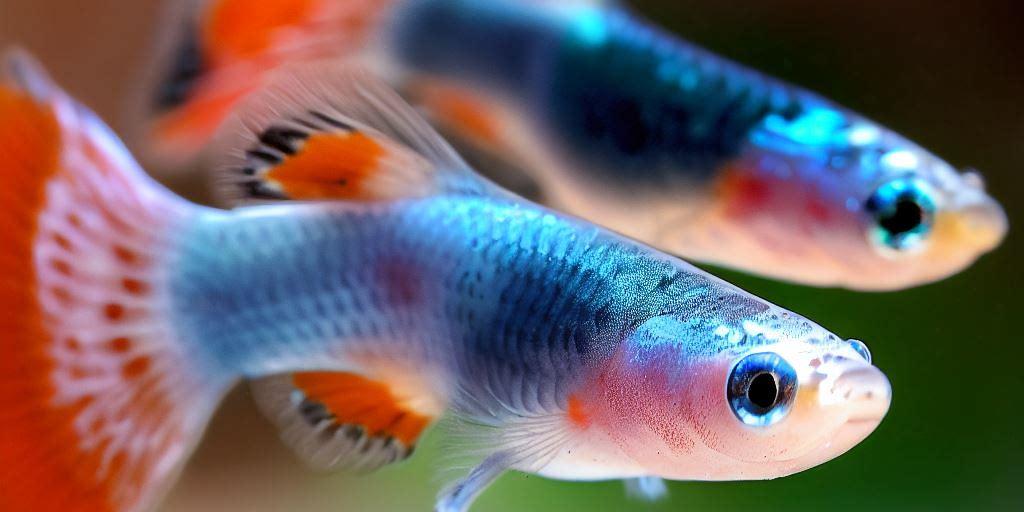
Guppies (Poecilia reticulata) are small, vibrant, and highly popular freshwater fish among aquarists. Originating from the waters of South America, guppies are known for their striking colors, intricate patterns, and elegant, flowing fins. They are prolific breeders, making them a favorite choice for beginners and experienced aquarists alike.
Guppies are a peaceful species, typically getting along well with other community fish. These fish are livebearers, meaning they give birth to live fry rather than laying eggs.
Guppies have been extensively bred, resulting in various strains and color variations. They are hardy and adaptable, making them suitable for a wide range of aquarium setups.
Guppies are often chosen for their active and entertaining behavior in the tank.
Quick Specs
Water parameters
| Temperature: | 72-82°F (22-28°C) |
| pH: | 6.8-7.8 |
| Hardness: | 8-12 dGH |
| Other: | Ammonia, Nitrites, and Nitrates should be kept at minimal levels through regular water changes and maintenance. |
| Water changes: | A regular water change of 10-20% every 1-2 weeks is recommended to maintain water quality. |
Behavior & compatibility
Schooling Behavior: Guppies are social fish that prefer groups; they don’t form a tight school, but they are more confident and active when kept with other guppies. Guppies (Poecilia reticulata) should be kept in groups (minimum 6; ideally 8–10 for best display).Temperament: Generally peaceful; not typically a fin-nipping species (though chasing can happen in tight or imbalanced groups).
Centrepiece: In nano/community tanks, colorful males can act as a “soft centrepiece,” though they’re usually part of an active group rather than a single focal fish.
Prolific or Livebearing:Classic livebearers and can reproduce very quickly in typical aquarium conditions.
Swimming zone:Mostly middle/upper swimmers.
Interaction with Plants:Guppies tend to interact well with live or artificial plants in the aquarium. Live plants can provide shelter and may even serve as a source of food for fry.
Setup essentials
Lid: A tank cover is not necessary unless you have particularly active guppies that may jump out. It can provide added security.Filter: A filter is preferred and highly recommended to maintain water quality by removing waste and toxins.
Substrate: Fine gravel or sand is preferred as substrate, allowing guppies to sift through it comfortably.
Lighting: While not necessary, aquarium lighting can enhance the colors of guppies and promote plant growth if live plants are present in the tank.
Heater: A heater is preferred and often necessary to maintain a stable water temperature within the recommended range, especially in cooler environments.
Air Pump: An air pump is not necessary for guppies, but it can help improve oxygen exchange and water circulation in the tank.
Feeding Regimen
Guppies are omnivorous and should be fed a varied diet consisting of high-quality flakes or pellets, supplemented with live or frozen foods like brine shrimp or daphnia. Feed them 2-3 times a day, only what they can consume in a few minutes.Lifespan
Guppies typically live for 2-3 years, although with exceptional care, they can sometimes reach up to 5 years.Tank Mates
Good tank mates
Peaceful community fish (platies, mollies, many tetras), Corydoras, snails—best with compatible water parameters.
Avoid
Fin nippers (some barbs/tetras), aggressive fish, and tank mates that stress or damage long fins.
Note
Hard-water friendly and breed quickly; keep water clean and stable to reduce disease issues.
Common problems + quick fixes
Improve water quality and avoid crowding; treat early.
Manage sexes or rehome fry.
Quarantine new fish and treat if consistent weight loss appears.
Interesting Facts
- Guppies are named after Robert John Lechmere Guppy, who discovered them in Trinidad in the late 19th century.
- Guppies are often used in scientific research due to their rapid reproduction and the ease of studying genetics using their offspring.
- They are known for their unique mating rituals, where males display their colorful fins to court females.
- Guppies have a remarkable ability to adapt to various water conditions, making them suitable for a wide range of aquarists, from beginners to experts.