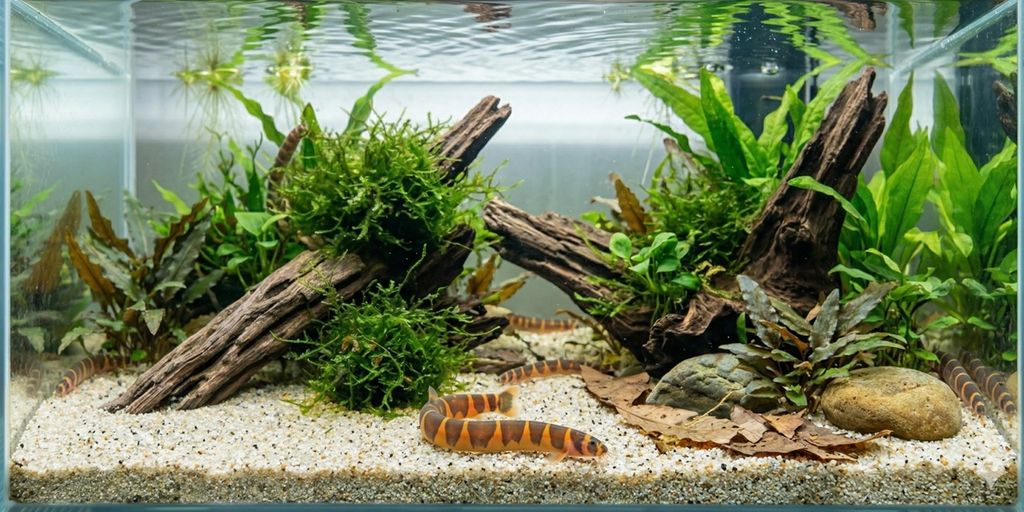
Kuhli loaches are peaceful, eel-like bottom fish that thrive in groups in a mature, planted aquarium with soft sand and plenty of hiding places. They are naturally shy and often become most active at dusk or at night, especially when kept in a larger group. A secure lid is essential because they can squeeze through small gaps and escape. Feed sinking foods and make sure food reaches the bottom, as they can be outcompeted by fast mid-water fish. With stable, clean water and lots of cover, they become a fascinating “character species” that adds life to the substrate zone.
Quick Specs
Water parameters
| Temperature: | 75–82°F (24–28°C). Keep it stable; warm water should be well-oxygenated. |
| pH: | 5.5–7.5 (slightly acidic to neutral; stability matters most). |
| Hardness: | 2–12 dGH (soft to moderately hard; softer is preferred). |
| Other: | Ammonia and nitrites must be 0 ppm at all times. Keep nitrates low (ideally under ~20–30 ppm). Kuhli loaches are sensitive to poor water quality and to many medications (especially harsh dosing), so quarantine and stability are important. Provide gentle flow, lots of cover, and a sand substrate to protect their skin and barbels. Ensure the tank is secure—loaches can squeeze through small gaps. |
| Water changes: | Change about 25–35% weekly to keep water stable and the substrate clean. In smaller tanks or heavier stocking, 15–25% twice weekly can improve stability. Gentle substrate cleaning is important, but avoid deep vacuuming if you use leaf litter or heavily planted soil layers. |
Behavior & compatibility
Schooling Behavior: Kuhli loaches are not true schooling fish, but they are highly social and do best in groups. In a group they are more confident and may be seen more often; kept singly they usually hide and become stressed.Temperament: Kuhli loaches are peaceful, not aggressive, and not fin-nippers. They may be stressed by aggressive fish and can be harmed by fin-nippers that target their elongated bodies.
Centrepiece: They are not a centerpiece fish; they are a bottom-companion ‘character species’ that adds interesting behavior, especially at dusk and nighttime.
Prolific or Livebearing:They are egg layers (not livebearers). Kuhli loaches can breed in captivity but it’s uncommon in typical community tanks; they are not typically prolific without specific conditions.
Swimming zone:They are bottom-dwelling fish that spend most of their time foraging and burrowing along the substrate, often becoming more active at dusk or at night.
Interaction with Plants:Plant-safe and benefits strongly from planted tanks. Plants and hardscape provide cover and shaded areas, making them more active and visible. They may uproot very delicate new plants while burrowing, so anchor plants well.
Setup essentials
Lid: A tank cover is necessary. Kuhli loaches can escape through small gaps, climb cords, and squeeze out of openings. Use a tight lid and block cable gaps.Filter: A filter is necessary. Use gentle-to-moderate filtration with good biological capacity and avoid strong blasting flow across the bottom. Pre-filter intakes or use sponge filters to prevent loaches from getting stuck in intakes.
Substrate: Soft sand is strongly preferred. Avoid sharp gravel because kuhlis burrow and can injure their skin/barbels. Leaf litter and smooth hiding tubes/caves are excellent additions.
Lighting: Special lighting isn’t required, but moderate lighting is preferred for viewing and plant growth. Kuhli loaches are shy and often prefer dimmer tanks with floating plants or shaded areas.
Heater: A heater is preferred and often necessary to maintain a stable tropical range (24–28°C), especially in cooler rooms or during seasonal swings.
Air Pump: An air pump is preferred if your tank runs warm, is heavily stocked, or has limited surface agitation. It’s not strictly required if filtration provides good oxygen exchange, but extra aeration can improve comfort in warm tropical setups.
Feeding Regimen
Feed 1× daily (or small portions 1–2× daily), preferably in the evening or after lights dim. Use sinking foods: micro pellets, wafers, and frozen/live foods like bloodworms, brine shrimp, daphnia. Ensure food reaches the bottom—do not rely on leftovers from mid-water fish.Lifespan
With proper care, kuhli loaches typically live about 8–10+ years.Tank Mates
Good tank mates
peaceful community fish (harlequin rasboras, rummy-nose/cardinal tetras in appropriate tanks), peaceful gouramis, corydoras (with enough floor space), bristlenose pleco (space dependent), snails; shrimp can work with enough cover (adult shrimp safer than shrimplets).
Avoid
aggressive fish, fin-nippers (tiger barbs/serpae tetras), large predators, and tanks with strong current or sharp gravel.
Note
provide multiple hiding spots and feed sinking foods after lights dim so kuhlis can eat without competition.
Common problems + quick fixes
Keep a proper group (6–10+), add more hiding spots (tubes/caves), use plants/leaf litter for cover, and feed after lights dim.
Switch to soft sand, remove sharp decor, and keep the bottom clean while maintaining cover.
Use gentle dosing, research loach-safe treatments, increase aeration, and quarantine fish before treating the display tank.
Use a tight-fitting lid, block cable gaps, and add intake sponges; check behind/under the tank if one goes missing.
Interesting Facts
Kuhli loaches are masters of hiding—many owners think they “disappeared,” only to spot them later curled inside a tube or under leaf litter. They may do sudden “zoomies” (fast swimming bursts), especially after water changes or at night—this is common behavior. They can burrow into sand, which is why soft substrate matters so much. They’re also surprisingly good escape artists, so even small lid gaps can become a problem.