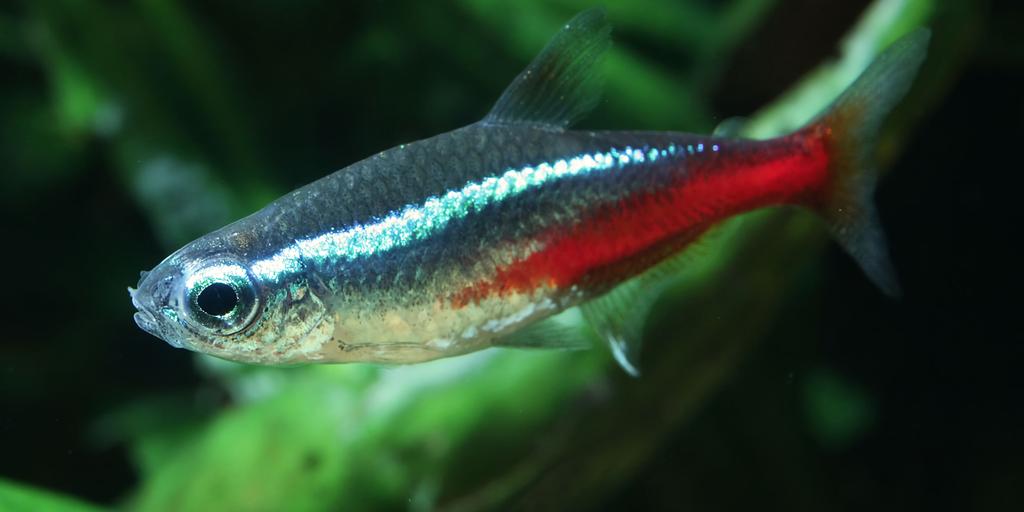
Neon Tetras (Paracheirodon innesi) are small, vibrant, and widely popular freshwater fish native to the blackwater and clearwater streams of South America, primarily in the Amazon Basin. They are a species of characin and belong to the family Characidae, known for their peaceful temperament and striking coloration.
Neon Tetras are characterized by their neon blue-green iridescent stripe that runs horizontally along their body, contrasting with their silver abdomen. These fish are often kept in community aquariums and are known for their compatibility with other peaceful fish species.
Neon Tetras are schooling fish, and they display their best behavior and colors when kept in groups of six or more.
They are relatively hardy and make an excellent choice for both beginners and experienced aquarists.
Neon Tetras have a reputation for their delicate appearance and active, shoaling behavior, which adds life and vibrancy to the aquarium.
Their small size and social nature make them a favorite among aquarium enthusiasts.
Quick Specs
Water parameters
| Temperature: | 72-78°F (22-26°C) |
| pH: | 6.0-7.0 |
| Hardness: | 1-10 dGH |
| Other: | Ammonia, Nitrites, and Nitrates should be kept at minimal levels through regular water changes and maintenance. |
| Water changes: | Regular water changes of 20-25% every 1-2 weeks help maintain water quality and promote the health of Neon Tetras. |
Behavior & compatibility
Schooling Behavior: Neon tetras are schooling fish and should be kept in groups; larger schools reduce stress and show more natural, coordinated swimming. Neon Tetras (Paracheirodon innesi) should be kept in groups (minimum 8; ideally 12–15 for best display).Temperament: Neons are peaceful schooling fish and are not known as fin-nippers as a defining trait.
Centrepiece: They’re usually not a single-fish centrepiece, but a healthy school can become a visual focal point (the “centrepiece effect” comes from numbers).
Prolific or Livebearing:They are egg-scatterers, not livebearers, and they are not considered “prolific” in typical community tank conditions.
Swimming zone:They mainly occupy mid-water and will also use upper areas when schooling and feeding.
Interaction with Plants:Neon Tetras generally interact well with live plants in the aquarium. Plants provide shelter, security, and a natural environment for these fish.
Setup essentials
Lid: A tank cover is not strictly necessary, but it can prevent fish from jumping out and provide added security.Filter: A filter is preferred and highly recommended to maintain water quality by removing waste and toxins.
Substrate: Neon Tetras are not picky about substrate, but a dark-colored substrate can enhance their colors and make them feel more secure.
Lighting: While not necessary, aquarium lighting can enhance the colors of Neon Tetras and promote plant growth if live plants are present in the tank.
Heater: A heater may be required to maintain a stable water temperature within the recommended range, especially in cooler environments.
Air Pump: An air pump is not necessary but can help improve oxygen exchange and water circulation, particularly in tanks with limited surface agitation.
Feeding Regimen
Neon Tetras are omnivorous and should be fed a varied diet consisting of high-quality flakes or pellets designed for small tropical fish. Supplement their diet with occasional live or frozen foods like brine shrimp or daphnia. Feed them 2-3 times a day, only what they can consume in a few minutes.Lifespan
Neon Tetras have an average lifespan of 3-5 years, although with proper care, they can sometimes live longer.Tank Mates
Good tank mates
Peaceful community fish (small rasboras, ember tetras), Corydoras, otocinclus, snails—best in mature, stable tanks.
Avoid
Large predatory fish, fin nippers, aggressive cichlids, and many angelfish setups (predation risk).
Note
More sensitive to unstable water than many beginner fish—do best in a well-cycled, consistent aquarium.
Common problems + quick fixes
Quarantine new fish and ensure stable, cycled tank conditions.
Treat ich promptly and stabilize temperature.
Increase school size, add plants, and reduce harsh lighting.
Interesting Facts
- The neon blue-green stripe that runs along their body is caused by a layer of cells containing guanine crystals that reflect light.
- Neon Tetras are often used as "indicator species" in scientific studies, as their health and behavior can signal the overall well-being of an aquatic ecosystem.
- Their social nature is evident in their shoaling behavior, where they swim together in coordinated groups, creating a mesmerizing display in the aquarium.
- Neon Tetras are known for their sensitivity to water quality, making regular water changes and proper filtration essential for their well-being.