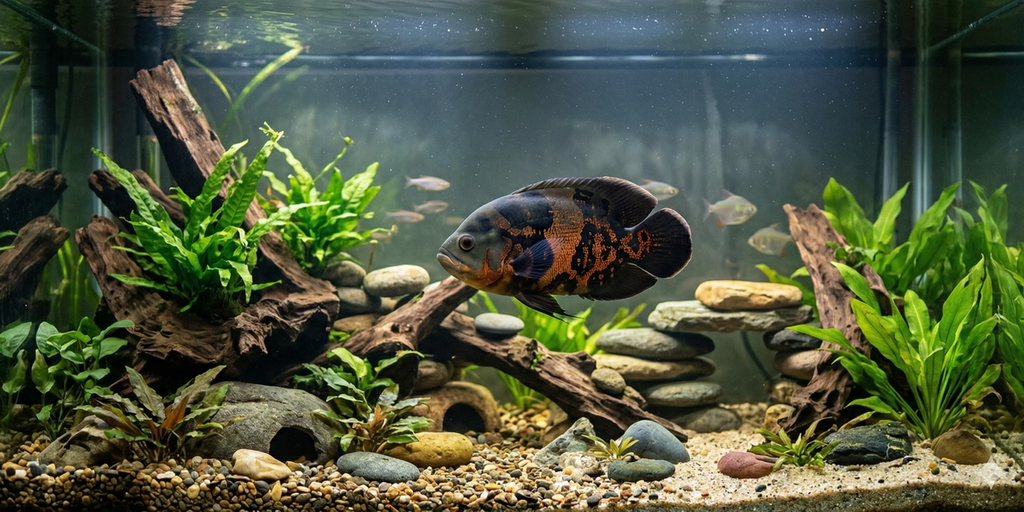
Oscars are large, intelligent cichlids famous for their strong personality and interactive behavior with keepers. They grow quickly, eat heavily, and produce a lot of waste, so they require a large tank, oversized filtration, and consistent large water changes. They can be territorial and predatory, which limits tankmate options - especially as they mature. If you plan for their adult size and keep water quality high, they become impressive long-term centerpiece fish.
Quick Specs
Water parameters
| Temperature: | 74–81°F (23–27°C). Keep it stable; warmer water requires good oxygenation and disciplined maintenance. |
| pH: | 6.5–7.5 (slightly acidic to neutral; stability matters most). |
| Hardness: | 5–20 dGH (moderate to hard; adaptable if stable). |
| Other: | Ammonia and nitrites must be 0 ppm at all times. Keep nitrates as low as practical (ideally under ~20–40 ppm) with strong filtration and large, regular water changes. Oscars are messy eaters and heavy waste producers, so stable biofiltration and frequent maintenance are critical. Provide strong oxygenation, especially in warmer water, and avoid sudden parameter swings. Secure heaters and equipment—oscars can bump and rearrange items. |
| Water changes: | Change about 30–50% weekly as a baseline. In heavily stocked tanks or with heavy feeding, 20–30% twice weekly is often better to control nitrates and keep water clear. Consistency matters more than occasional very large changes. |
Behavior & compatibility
Schooling Behavior: Oscars are not schooling fish. They are typically kept singly or as a bonded pair. A pair can be highly territorial, especially during breeding, and tankmate options become limited.Temperament: Oscars are territorial, predatory cichlids. They are not fin-nippers; they are more likely to chase, bite, or eat smaller fish. Compatibility depends on tank size and the specific individuals, but aggression and predation risk are always considerations.
Centrepiece: Oscars are classic centerpiece fish due to their size, intelligence, and strong personality—often interacting with keepers and begging for food.
Prolific or Livebearing:They are egg layers (not livebearers). Oscars can breed in captivity as bonded pairs and may become extremely territorial when spawning. They are not typically prolific in community setups because tankmates are often removed or attacked during breeding.
Swimming zone:Oscars use all levels of the aquarium, often cruising mid-water and investigating the bottom while foraging and rearranging decor.
Interaction with Plants:Most live plants are difficult with oscars. They often uproot, chew, or destroy plants while digging and exploring. If you want plants, use very hardy species attached to wood/rocks (and expect damage), or use artificial plants and focus on hardscape.
Setup essentials
Lid: A tank cover is necessary. Oscars can jump when startled and they splash during feeding; a lid also reduces evaporation and helps keep equipment secure.Filter: A filter is necessary and should be oversized. Use strong mechanical + biological filtration (often rated well above tank volume) because oscars produce heavy waste and eat messy foods. Ensure good circulation without creating constant blasting current where the fish rests.
Substrate: Sand or smooth gravel both work. Many keepers prefer sand (easier to clean and safer if the fish mouths substrate). Decor must be heavy and stable—oscars dig and rearrange. Avoid sharp rocks and unstable stacks.
Lighting: Special lighting isn’t required, but moderate lighting is preferred for viewing and for supporting hardy plants if attempted. Bright light can increase stress if the tank lacks cover.
Heater: A heater is preferred and often necessary to maintain stable tropical temperatures, especially in cooler rooms. Large tanks often use two heaters for redundancy.
Air Pump: An air pump is preferred, especially in warm water and large-cichlid setups where oxygen demand and waste are high. If filtration already provides strong surface agitation you may not need a dedicated air pump, but extra aeration is often beneficial.
Feeding Regimen
Feed 1–2 times per day in appropriate portions. Use high-quality cichlid pellets as the staple, supplemented with frozen foods (shrimp, fish, worms) and occasional vegetables. Avoid feeder fish—they increase parasite/disease risk and often cause nutritional problems. Remove leftovers promptly to protect water quality.Lifespan
With proper care, oscars typically live about 10–15 years (sometimes longer).Tank Mates
Good tank mates
only in very large tanks - robust large fish with compatible temperament (some larger cichlids, large catfish, silver dollars) and only with careful monitoring.
Avoid
small fish (will be eaten), fin-nippers that stress oscars, very aggressive cichlids, shrimp/snails (often eaten), and mixed communities in undersized tanks.
Note
tankmate compatibility varies by individual fish; always have a separation plan and prioritize tank size and filtration.
Common problems + quick fixes
Increase filtration/mechanical cleaning, reduce feeding, and do 30–50% weekly water changes (or 20–30% twice weekly).
Use a larger tank, provide territories/visual breaks, choose robust tankmates only, and be prepared to separate fish if aggression escalates.
Maintain excellent water quality (low nitrates), improve diet quality/variety, and keep up consistent maintenance.
Use heater guards, secure equipment, keep decor heavy and stable, and avoid precarious rock stacks.
Interesting Facts
Oscars often recognize their owner and may beg at the glass for food, which is why many people describe them as “water dogs.” They can rearrange decor and even move small items around the tank, so equipment needs to be secured. Many health issues blamed on “weak fish” are actually caused by long-term nitrate buildup and inconsistent maintenance in undersized tanks.