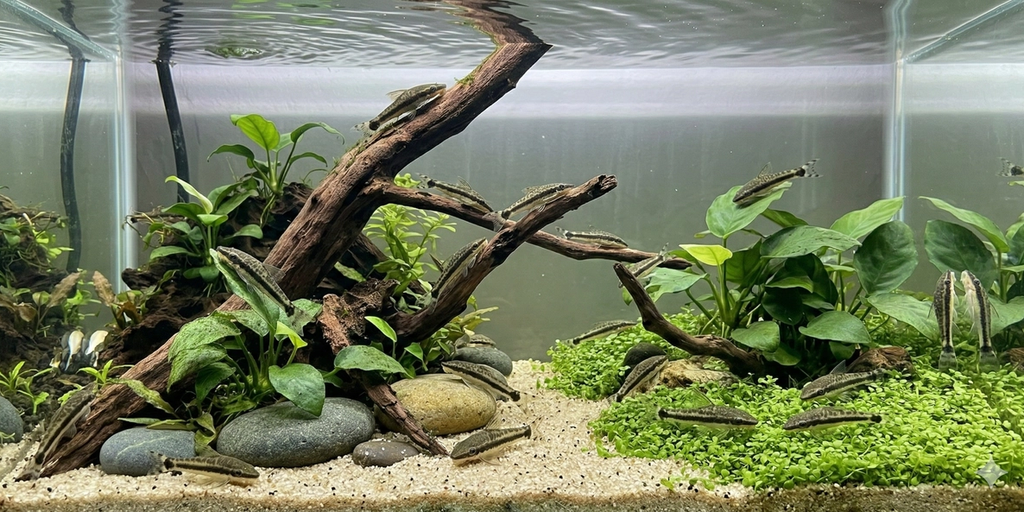
Otocinclus (often called “otos”) are small, peaceful algae-grazing catfish that spend most of their time on glass, leaves, and hardscape. They are social fish and should be kept in groups, which helps them feel secure and behave naturally. Oto catfish are best added to a mature aquarium with stable water parameters and an established supply of biofilm/algae. In new tanks, they can struggle to find enough food and may slowly starve even when the tank looks “clean.” They prefer well-oxygenated water and do best with gentle-to-moderate flow and a reliable filter. While they graze algae, they still need supplemental feeding such as algae wafers, blanched vegetables, and prepared foods designed for herbivores. They are very community-friendly and rarely bother other fish, shrimp, or plants. Because they can be sensitive to ammonia/nitrite and sudden changes, consistent maintenance and stable parameters matter more than chasing perfect numbers. When cared for properly, otos are excellent helpers in planted tanks and peaceful nano/community aquariums. Avoid keeping them singly; a proper group and a mature tank are the two biggest success factors.
Quick Specs
Water parameters
| Temperature: | 72–79°F (22–26°C) |
| pH: | 6.0–7.5 |
| Hardness: | 2–15 dGH |
| Other: | Ammonia and nitrites should be 0 ppm. Keep nitrates low (ideally <20 ppm) through regular water changes, appropriate stocking, and routine maintenance. |
| Water changes: | About 25–30% of the water should be changed weekly (or every 1–2 weeks in lightly stocked tanks) to maintain stable water quality. Consistency is more important than large, irregular water changes. |
Behavior & compatibility
Schooling Behavior: Otocinclus are social, schooling/shoaling catfish. They are calmer, more active, and feed better when kept in groups rather than alone.Temperament: Otocinclus are peaceful and non-territorial. They are not fin-nippers and are rarely aggressive toward other fish.
Centrepiece: Otocinclus are not a centerpiece fish. Their value is in peaceful behavior, algae grazing, and being excellent support fish in planted/community tanks.
Prolific or Livebearing:Otocinclus are not livebearers and are not typically prolific in home aquariums. Breeding is possible but uncommon and requires specific conditions.
Swimming zone:Otocinclus spend most of their time on surfaces (plants, glass, wood) in the lower and middle areas of the tank, grazing continuously.
Interaction with Plants:Otocinclus are plant-safe and are excellent for planted tanks. They graze biofilm and soft algae from leaves without damaging healthy plants.
Setup essentials
Lid: A tank cover is not required for otocinclus in most setups, but a cover can reduce evaporation and keep temperature stable.Filter: A filter is highly recommended because otocinclus are sensitive to poor water quality and do best with stable, well-oxygenated water.
Substrate: Fine gravel or sand works well. Substrate choice is less critical than water quality and food availability, but smooth substrates are always safer for bottom fish.
Lighting: Special lighting is not required for otocinclus, but moderate lighting that supports live plants can encourage natural biofilm/algae growth for grazing.
Heater: A heater is preferred if your room temperature is unstable or drops below the recommended range. Stable temperature is important for long-term health.
Air Pump: An air pump is not strictly required, but it can be helpful to increase oxygen and surface agitation—especially in warm tanks or heavily stocked aquariums.
Feeding Regimen
Otocinclus are primarily algae/biofilm grazers but need supplemental food. Offer algae wafers or herbivore pellets daily, plus blanched zucchini/spinach/cucumber 2–3× per week. In new tanks, ensure they accept prepared foods and watch body condition closely.Lifespan
With proper care, otocinclus commonly live about 3–5 years.Tank Mates
Good tank mates
tiny calm nano fish (chili rasboras, phoenix rasboras, ember tetras), peaceful community fish with similar water needs, Corydoras (including pygmy species), shrimp/snails, and other non-aggressive bottom dwellers.
Avoid
aggressive cichlids, large predatory fish, boisterous fin-nippers, and very competitive feeders that prevent otos from getting enough food.
Note
otocinclus need a mature tank with stable water and regular supplemental feeding (not just ‘algae’). They are social—keep 6+ for best results.
Common problems + quick fixes
Add supplemental foods (algae wafers/herbivore pellets), offer blanched veggies, and avoid adding otos to brand-new tanks. Watch belly shape—otos should look gently rounded, not pinched.
Use slow acclimation, keep ammonia/nitrite at 0, ensure strong oxygenation, and quarantine when possible. Stable temperature and gentle flow help recovery.
Try different brands/forms (wafers, gel foods, veggies). Feed after lights out and reduce competition by spreading food across the tank.
Add plants, driftwood, and shaded areas (floating plants). Increase group size to improve confidence.
Interesting Facts
Otocinclus are specialized grazers that constantly “pick” at surfaces for biofilm, which is why mature tanks suit them best. They often rest in groups and may even pile together on leaves or driftwood. Many otos are wild-caught, so careful acclimation and quarantine can significantly improve survival.