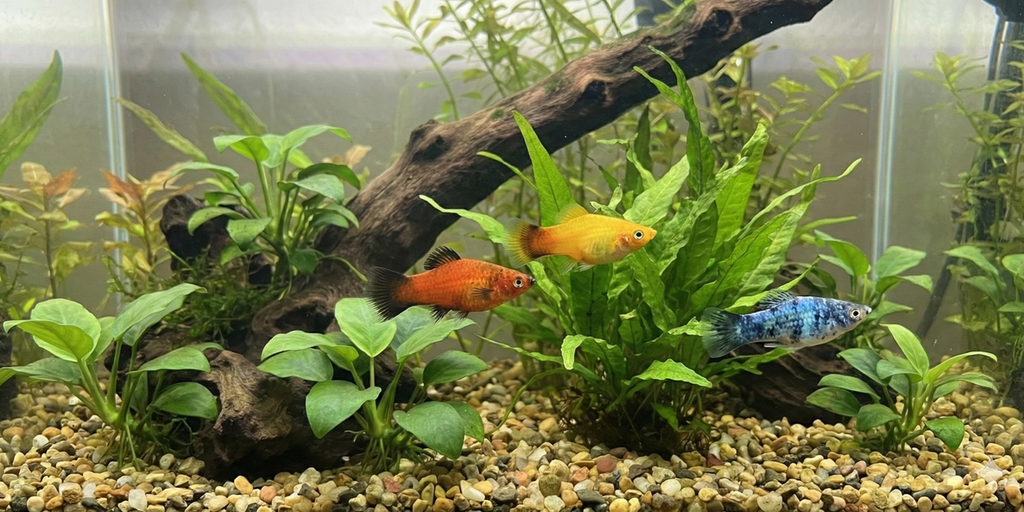
Platy (Xiphophorus maculatus) is a small, peaceful, and popular freshwater fish species native to Central America, primarily found in Mexico, Guatemala, and Honduras. They belong to the family Poeciliidae and are closely related to swordtails and guppies.
Platies are known for their colorful and lively nature, making them a popular choice for aquarium enthusiasts. They come in various color variations and patterns, which have been selectively bred to create a wide array of strains.
Platies are livebearers, meaning they give birth to live fry rather than laying eggs. They are omnivorous and typically feed on small invertebrates, algae, and plant matter in the wild.
Platies are adaptable and relatively easy to care for, making them suitable for beginner and experienced aquarists alike. They are social fish and are best kept in small groups to promote their well-being and display their natural behaviors.
Quick Specs
Water parameters
| Temperature: | 70-80°F (21-27°C) |
| pH: | 6.8-8.0 |
| Hardness: | 10-25 dGH |
| Other: | Ammonia, Nitrites, and Nitrates should be kept at minimal levels through regular water changes and maintenance. |
| Water changes: | Regular water changes of 20-25% every 1-2 weeks help maintain water quality and promote the health of platies. |
Behavior & compatibility
Schooling Behavior: Platys are social livebearers that prefer groups; while not true schoolers, they are calmer and more active in groups. Platy (Xiphophorus maculatus) should be kept in groups (minimum 4; ideally 6–8 for best display).Temperament: Generally peaceful; males may chase during mating, but platies aren’t typically “fin-nippers” as a defining trait (rare nips can happen in crowded/imbalanced setups).
Centrepiece: Platies can be a small-tank centerpiece thanks to bright color varieties, constant movement, and beginner-friendly behavior.
Prolific or Livebearing:Platies are prolific livebearers and can produce offspring frequently under suitable conditions.
Swimming zone:They primarily occupy the mid to upper water levels and are not considered bottom-dwelling fish.
Interaction with Plants:They typically interact well with live or artificial plants in the aquarium. Plants provide shelter, security, and a natural environment.
Setup essentials
Lid: A tank cover is not strictly necessary, but it can prevent fish from jumping out and provide added security.Filter: A filter is preferred and recommended to maintain water quality by removing waste and toxins.
Substrate: Platies are flexible regarding substrate and can thrive with various types, including sand, fine gravel, or planted substrates.
Lighting: While not necessary, aquarium lighting can enhance the colors of platies and promote plant growth if live plants are present in the tank.
Heater: A heater may be required to maintain a stable water temperature within the recommended range, especially in cooler environments.
Air Pump: An air pump is not typically necessary, but it can improve oxygen exchange and water circulation, especially in tanks with limited surface agitation.
Feeding Regimen
They are omnivorous and should be fed a balanced diet consisting of high-quality flakes or pellets designed for small tropical fish. Supplement their diet with occasional live or frozen foods like brine shrimp or daphnia. Feed them 2-3 times a day, only what they can consume in a few minutes.Lifespan
Platies have an average lifespan of 3-5 years, although with proper care, some individuals can live longer.Tank Mates
Good tank mates
Other livebearers (guppies, mollies, swordtails), peaceful community fish, Corydoras, snails—best in moderately hard water.
Avoid
Fin nippers, aggressive fish, and very soft/acidic setups (water mismatch) that stress livebearers.
Note
Hardy and active; will breed frequently—plan population control or provide cover for fry.
Common problems + quick fixes
Manage sexes and have a fry plan.
Feed less and include veggie-based foods.
Improve maintenance and avoid crowding.
Interesting Facts
- Platies have been selectively bred to develop various color strains, including the popular "mickey mouse platy" with its distinctive black marking resembling Mickey Mouse's silhouette.
- They are known for their rapid reproduction, making them a great choice for aquarists interested in breeding fish.
- Platies are often used in community tanks as peaceful tankmates for a variety of other fish species due to their non-aggressive nature.