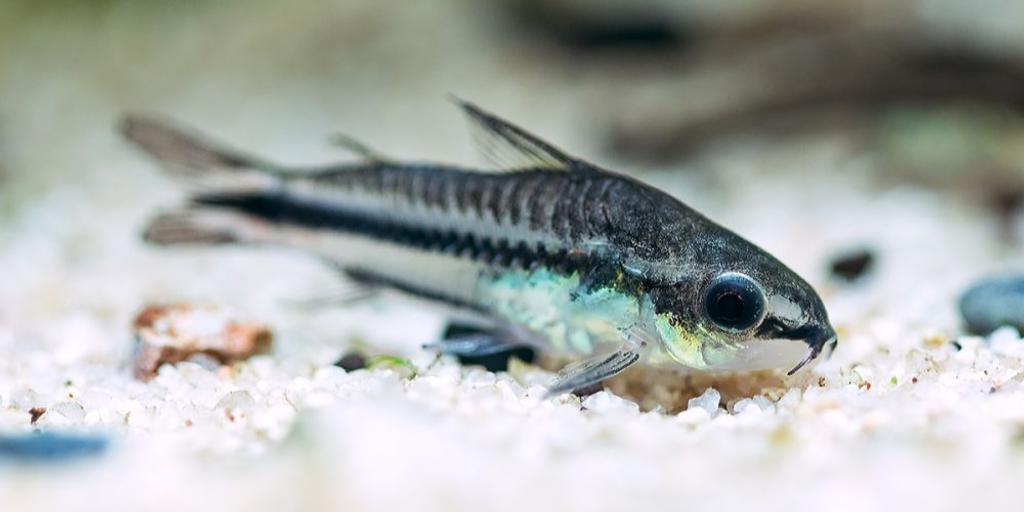
Pygmy Corydoras (Corydoras pygmaeus) is a tiny, peaceful catfish that is ideal for planted nano and community aquariums. Unlike many other corydoras that stay strictly on the bottom, pygmy corys often swim in the middle water column as well, especially when kept in a proper group. They are very social and feel safest in a school; in small numbers they hide more and become less active. They do best in mature, stable tanks with excellent water quality because catfish are sensitive to ammonia, nitrite, and poorly maintained substrates. A soft sand substrate is strongly recommended to protect their barbels while they forage. They enjoy gentle flow, plenty of plants, driftwood, and shaded areas, and they appreciate open areas for group movement. They are extremely peaceful and usually compatible with other calm nano fish, shrimp, and snails. Because they are small and gentle, they should not be housed with aggressive or very large fish. With consistent maintenance and appropriate group size, they become active, endearing fish that constantly “patrol” the tank.
Quick Specs
Water parameters
| Temperature: | 72–79°F (22–26°C), stable (moderately warm). |
| pH: | 6.2–7.5 (slightly acidic to neutral). |
| Hardness: | 2–12 dGH (soft to moderately hard). |
| Other: | Ammonia and nitrites must be 0 ppm at all times; nitrates should be kept low (ideally under ~20 ppm). Keep the substrate clean (gentle gravel vac on sand) to prevent waste buildup that can irritate barbels. |
| Water changes: | Change about 20–30% weekly to maintain stable water quality. In smaller tanks or heavier feeding, smaller changes twice weekly (e.g., 15–20% twice weekly) can improve stability and keep nitrates down. |
Behavior & compatibility
Schooling Behavior: Pygmy corydoras are very social and should be kept in groups; larger groups make them more confident and they may shoal in midwater. Pygmy Corydoras (Corydoras pygmaeus) should be kept in groups (minimum 8; ideally 10–12 for best display).Temperament: They are very peaceful, not aggressive, and not fin-nippers.
Centrepiece: They are not a typical centerpiece fish; they are more of a “character group” that adds constant activity and charm.
Prolific or Livebearing:They are egg layers (not livebearers). They may breed in captivity, but they are not typically prolific in community tanks unless breeding is intentionally managed.
Swimming zone:They are primarily bottom foragers but also spend a lot of time in mid-water when kept in a school.
Interaction with Plants:Excellent with plants and very plant-safe. Plants provide cover and help them feel secure; they often rest among low plants and hardscape.
Setup essentials
Lid: A tank cover is preferred to reduce evaporation and prevent accidental jumps, and it helps keep conditions stable.Filter: A filter is necessary. Use gentle-to-moderate filtration with good biological capacity; stable, clean water is especially important for corydoras.
Substrate: Soft sand is preferred (strongly recommended). Avoid sharp gravel to protect their barbels; fine sand lets them forage naturally.
Lighting: Lighting is preferred mainly for plant growth and viewing. They don’t require intense lighting; provide shaded areas with plants.
Heater: A heater is preferred if room temperature is unstable; not always necessary if the tank reliably stays 22–26°C. Stability matters most.
Air Pump: An air pump is not strictly necessary if filtration provides good surface movement, but gentle aeration can be helpful (preferred) in warmer water or if oxygen seems low. Avoid blasting flow.
Feeding Regimen
Feed 1–2 times per day. Use sinking micro pellets/wafers and small frozen foods (bloodworms, daphnia, brine shrimp). They should be intentionally fed—don’t rely on leftover food from mid-water fish.Lifespan
With proper care, Pygmy Corydoras typically live about 3–5 years.Tank Mates
Good tank mates
Peaceful nano fish (ember tetras, rasboras), otocinclus, shrimp/snails—best in planted tanks.
Avoid
Aggressive or large fish, boisterous species that stress them, and rough substrate that damages barbels.
Note
Small Corydoras—keep in groups and provide fine sand; they often swim midwater too.
Common problems + quick fixes
Keep them in a proper group (8+), add plants and calm zones.
Use smooth sand and stable maintenance.
Target feed sinking micro foods and feed when other fish are less active.
Interesting Facts
Pygmy Corydoras are one of the few cory species that regularly “schools” in the middle of the tank, not just on the substrate. They use their sensitive barbels to search sand for food, which is why soft sand and clean substrate matter. In a confident group, they often perch on leaves and hardscape like tiny birds resting between foraging runs.