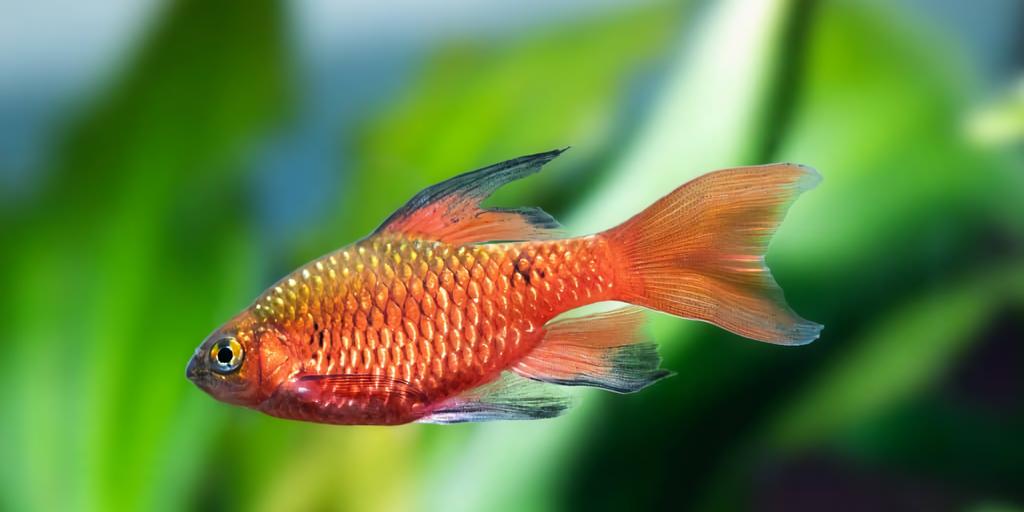
The Rosy Barb (Pethia conchonius), also known as the Red Barb, is a colorful freshwater fish native to the rivers and streams of India, Bangladesh, and Nepal. They belong to the family Cyprinidae and are known for their striking coloration, with males displaying vibrant red and orange hues.
Rosy Barbs are popular in the aquarium hobby due to their active nature, attractive appearance, and ease of care.
These fish are known to be peaceful and can coexist with a variety of tankmates, making them suitable for community aquariums. They are shoaling fish, meaning they thrive when kept in groups of five or more individuals.
In their natural habitat, Rosy Barbs inhabit slow-moving waters with abundant vegetation.
Quick Specs
Water parameters
| Temperature: | 68-77°F (20-25°C) |
| pH: | 6.5-7.5 |
| Hardness: | 5-15 dGH |
| Other: | Ammonia, Nitrites, and Nitrates should be kept at minimal levels through regular water changes and maintenance. |
| Water changes: | Regular water changes of 20-25% every 1-2 weeks help maintain water quality and promote the health of Rosy Barbs. |
Behavior & compatibility
Schooling Behavior: Rosy barbs are active schooling fish; keeping a proper group reduces fin-nipping and encourages them to school together. Rosy Barb (Pethia conchonius) should be kept in groups (minimum 6; ideally 8–10 for best display).Temperament: Semi-active and can be pushy; they’re known to fin-nip, especially if kept in small numbers or with slow, long-finned tank mates (behavior improves in larger groups).
Centrepiece: Rosy Barbs can work as a centerpiece (especially in a lively school) because adults develop strong rosy-red coloration and are very active in the mid-water, drawing attention in community tanks.
Prolific or Livebearing:Rosy Barbs are prolific egg layers. They do not give birth to live fry.
Swimming zone:They primarily occupy the mid to upper water levels and are not considered bottom-dwelling fish.
Interaction with Plants:Rosy Barbs typically interact well with live or artificial plants in the aquarium. Plants provide shelter and a natural environment.
Setup essentials
Lid: A tank cover is not strictly necessary, but it can prevent fish from jumping out and provide added security.Filter: A filter is preferred and recommended to maintain water quality by removing waste and toxins.
Substrate: They are flexible regarding substrate and can thrive with various types, including sand, fine gravel, or planted substrates.
Lighting: While not necessary, aquarium lighting can enhance the colors of Rosy Barbs and promote plant growth if live plants are present in the tank.
Heater: A heater may be required to maintain a stable water temperature within the recommended range, especially in cooler environments.
Air Pump: While not necessary, an air pump can enhance oxygen exchange and water circulation, especially in tanks with limited surface agitation.
Feeding Regimen
They are omnivorous and should be fed a balanced diet consisting of high-quality flakes or pellets designed for tropical fish. Supplement their diet with occasional live or frozen foods like brine shrimp or daphnia. Feed them 2-3 times a day, only what they can consume in a few minutes.Lifespan
Rosy Barbs have an average lifespan of 5-7 years, although with proper care, some individuals can live longer.Tank Mates
Good tank mates
Active cool-water community fish (white clouds), similarly active robust fish in groups, and compatible bottom dwellers in larger tanks.
Avoid
Slow long-finned fish (bettas, fancy guppies), very timid nano fish, and aggressive cichlids.
Note
Can fin-nip if under-grouped—keep a proper school and provide open swimming space.
Common problems + quick fixes
Keep a proper group and avoid long-finned tankmates.
Provide swimming space and plants for breaks.
Selective breeding has led to various color variations, including gold, albino, and long-finned Rosy Barbs.
Interesting Facts
- Rosy Barbs are known to display increased coloration and vibrancy during the breeding season.
- They are often used in outdoor ponds in temperate climates due to their hardiness and adaptability.
- Selective breeding has led to various color variations, including gold, albino, and long-finned Rosy Barbs.