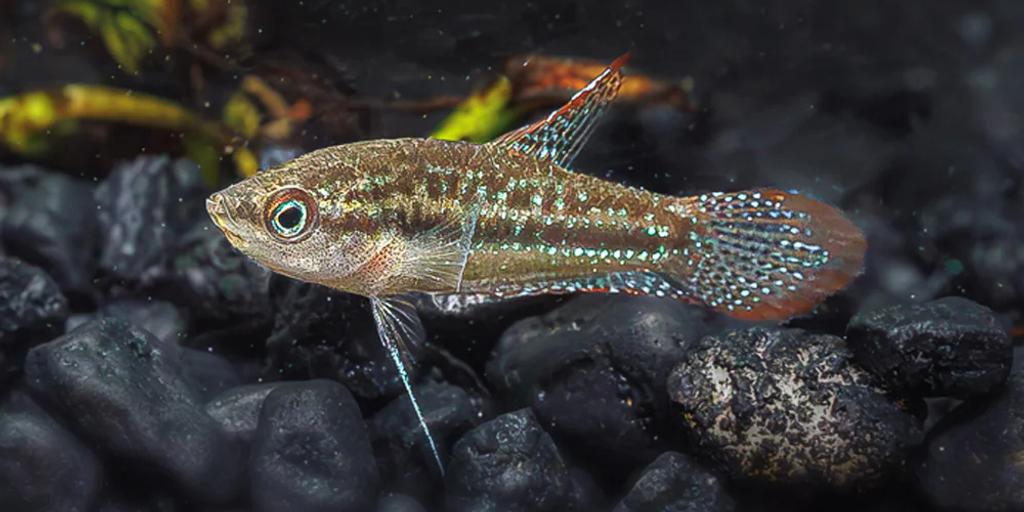
Sparkling Gourami (Trichopsis pumila) is a tiny labyrinth fish known for its subtle shimmering pattern and calm, curious behavior. Unlike many schooling nano fish, it does best as a small group or pair in a peaceful, planted aquarium with gentle flow. It prefers calm water, lots of plant cover (including floating plants), and shaded areas where it feels secure. As a labyrinth fish, it can breathe atmospheric air, so it needs access to the surface and does not require strong aeration. Sparkling gouramis can be mildly territorial with each other, especially males, but in a well-planted tank with line-of-sight breaks they are usually manageable. They are very peaceful with most nano community fish and are often kept with shrimp and snails (very small shrimp fry may be eaten). They can be shy at first and may hide in bright, bare tanks. They thrive on small frozen/live foods and also accept quality micro pellets, but they are not aggressive feeders and can be outcompeted. This species is famous for making faint “croaking/clicking” sounds, especially during social displays or breeding behavior.
Quick Specs
Water parameters
| Temperature: | 75–82°F (24–28°C), stable and warm. |
| pH: | 6.0–7.5 (slightly acidic to neutral; stability matters most). |
| Hardness: | 2–12 dGH (soft to moderately hard). |
| Other: | Ammonia and nitrites must be 0 ppm at all times; nitrates should be kept low (ideally under ~20 ppm) through regular water changes, controlled feeding, and stable filtration. They also need access to the water surface for labyrinth breathing. |
| Water changes: | Change about 20–30% weekly to maintain stable water quality. In smaller tanks or if feeding heavier frozen foods, smaller changes twice weekly (e.g., 15–20% twice weekly) can help keep nitrates low. |
Behavior & compatibility
Schooling Behavior: Sparkling gouramis are not schooling fish. They are best kept singly or as a peaceful pair/trio in a calm, well-planted tank, and can be shy if kept without cover.Temperament: They are generally peaceful with other species, but males can show mild territorial aggression toward other sparkling gouramis. They are not typical fin-nippers.
Centrepiece: They can act as a “nano centerpiece” in a small planted tank because of their unique behavior and shimmering look, but they’re still small and subtle compared to larger gouramis.
Prolific or Livebearing:They are not livebearers; they are bubble-nest builders (labyrinth fish). They can breed in captivity, but they are not typically “prolific” in community tanks because fry survival is low without separation.
Swimming zone:They mostly occupy the middle to upper levels and frequently use the surface for air breathing; they are not bottom-dwellers.
Interaction with Plants:Excellent with plants and benefits strongly from them. Dense plants and floating plants reduce stress, provide territories, and support natural behavior (and breeding).
Setup essentials
Lid: A tank cover is necessary/preferred (strongly recommended) because they gulp air at the surface and are more likely to jump if startled; a cover also keeps warm, humid air above the water which labyrinth fish benefit from.Filter: A filter is necessary. Use gentle filtration (sponge filter or low-flow HOB) because they prefer calm water and can be stressed by strong current.
Substrate: Fine sand or planted soil is preferred, especially in planted tanks. Dark substrate helps them feel secure and enhances their shimmering pattern.
Lighting: Lighting is preferred (mainly for plants and viewing), but keep it moderate and provide shaded areas with floating plants so they feel secure.
Heater: A heater is preferred and often necessary to keep a stable 24–28°C, especially in cooler rooms.
Air Pump: An air pump is not necessary because they can breathe atmospheric air (labyrinth fish). Gentle aeration can be used if oxygen is low, but avoid strong surface turbulence.
Feeding Regimen
Feed 1–2 times per day in small portions. They prefer small frozen/live foods (baby brine shrimp, daphnia, cyclops, microworms) and will also take quality micro pellets. They are slower feeders, so ensure they get food if kept with faster fish.Lifespan
With proper care, Sparkling Gouramis typically live about 3–5 years.Tank Mates
Good tank mates
Calm nano/community fish (ember tetras, rasboras), pygmy Corydoras, otocinclus, snails—best in planted, low-flow tanks.
Avoid
Fin nippers, aggressive gouramis/cichlids, and fast boisterous fish that stress shy labyrinth fish.
Note
Labyrinth fish—prefers calm water, lots of cover, and easy surface access; shy in bare tanks.
Common problems + quick fixes
Add dense plants and floating cover; keep lighting softer.
Start with frozen/live foods, then transition slowly to micro pellets.
Add dense plants and floating cover; keep lighting softer.
Interesting Facts
Sparkling Gouramis are famous for making soft “croaking/clicking” sounds during social displays—one of the few aquarium fish you can actually hear. As labyrinth fish, they can breathe air, so calm surface access and a covered tank (to keep warm, humid air) helps them thrive. In heavily planted nanos, they often become the “personality fish,” exploring plants and interacting with their environment.