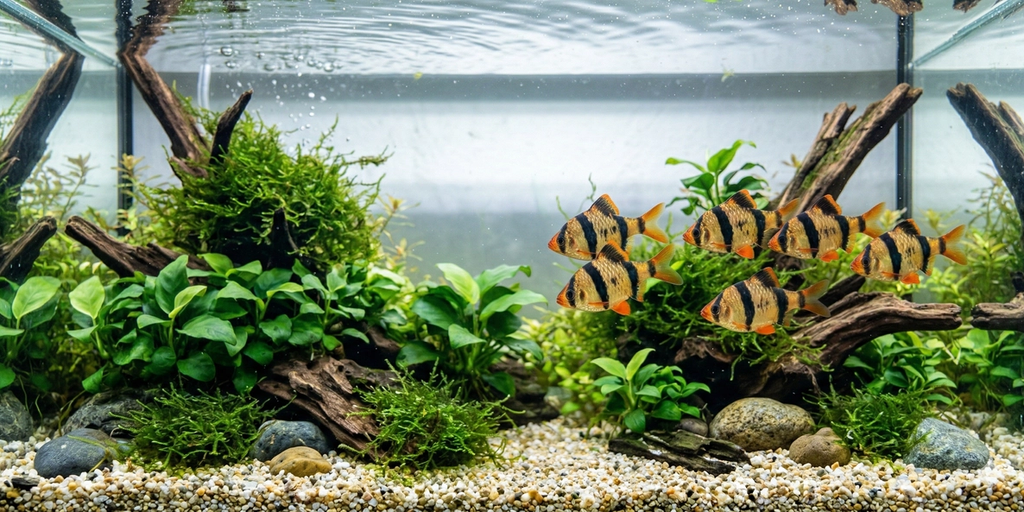
Tiger barbs are classic high-energy community fish best kept in a sizable shoal in a longer tank with open swimming space and plants/wood along the edges. They’re hardy and adaptable, but their behavior can be challenging: they are well-known fin-nippers, especially when kept in small groups or with slow, long-finned tankmates. A larger group (often 10+) and a well-structured aquarium usually reduces harassment and creates a more stable social dynamic. With the right setup, they become an active, eye-catching mid-water school.
Quick Specs
Water parameters
| Temperature: | 74–80°F (23–27°C). Keep it stable; they do best in warm, well-maintained community tanks. |
| pH: | 6.0–7.5 (slightly acidic to neutral; stability matters most). |
| Hardness: | 5–15 dGH (moderate hardness is typically fine). |
| Other: | Ammonia and nitrites must be 0 ppm at all times. Keep nitrates low (ideally under ~20–30 ppm) through regular water changes and adequate filtration. Tiger barbs are hardy, but cramped tanks, small group size, or incompatible tankmates often trigger chasing and fin-nipping. |
| Water changes: | Change about 20–30% weekly to maintain stable water quality. In smaller tanks or heavier stocking, 15–20% twice weekly can help keep nitrates down and reduce stress-related behavior. |
Behavior & compatibility
Schooling Behavior: Tiger barbs are shoaling fish and must be kept in groups. In a proper shoal they direct their energy toward each other more evenly; in small numbers they often harass tankmates, especially slow or long-finned fish.Temperament: Tiger barbs are famous fin-nippers, especially toward slow or long-finned fish. Keeping a larger group (10+) and giving them space and structure can reduce nipping, but they are still a higher-risk choice for long-finned tankmates.
Centrepiece: They are not a single centerpiece fish, but a large shoal can be a bold, high-energy feature in a community aquarium.
Prolific or Livebearing:They are egg layers (not livebearers). They may spawn if well-conditioned, but they are not typically prolific in community tanks because eggs/fry are eaten unless separated.
Swimming zone:They are active mid-water fish that spend most of their time swimming in the middle and upper areas, especially during feeding.
Interaction with Plants:Plant-safe. They don’t usually damage plants, and planted layouts help reduce aggression by breaking lines of sight. They may uproot delicate new stems if they dig in substrate, so anchor plants well.
Setup essentials
Lid: A tank cover is preferred. They can jump when startled, and a cover also reduces evaporation and keeps conditions stable.Filter: A filter is necessary. Use strong biological filtration with moderate flow and good oxygen exchange. Tiger barbs are active and produce a typical community bioload, but they do best with consistently clean water.
Substrate: Sand or fine gravel both work well. Darker substrate with plants/wood can reduce stress and improve coloration, while keeping open swimming lanes in the middle.
Lighting: Special lighting isn’t required, but moderate aquarium lighting is preferred for viewing and plant growth. Provide some cover/shaded areas so the group feels secure.
Heater: A heater is preferred and often necessary to maintain a stable tropical range (23–27°C), especially in cooler rooms or during seasonal swings.
Air Pump: An air pump is not strictly necessary if the filter provides good surface agitation, but gentle aeration is preferred in warmer tanks, higher stocking, or if oxygen seems low (they are very active swimmers).
Feeding Regimen
Feed 1–2 times per day in small portions. They accept quality flakes/pellets and do very well with frozen/live foods (brine shrimp, daphnia, bloodworms) several times per week. They are fast feeders—avoid overfeeding and ensure timid tankmates still get food.Lifespan
With proper care, tiger barbs typically live about 5–7 years.Tank Mates
Good tank mates
robust, fast-moving community fish (many danios, larger/robust tetras), corydoras (with enough space and appropriate substrate), bristlenose pleco (space dependent), sturdy loaches in larger tanks.
Avoid
long-finned/slow fish (bettas, fancy guppies, angelfish in many setups), timid nano fish that will be bullied, and most shrimp/shrimplets.
Note
best results come from a bigger shoal + a longer tank + lots of line-of-sight breaks.
Common problems + quick fixes
Increase shoal size (aim 10+), provide more space and plants/wood to break sight lines, and avoid slow/long-finned tankmates.
Use a longer tank, add line-of-sight breaks, avoid overcrowding, and keep the shoal size appropriate.
Feed in multiple spots, use sinking/slow foods for other species, and consider separating or choosing more compatible tankmates.
Reduce feeding, improve filtration, and do consistent 20–30% weekly water changes (or smaller changes twice weekly).
Interesting Facts
Tiger barbs often look and behave completely different depending on group size - small groups can be “mean,” while larger shoals are usually much more manageable. Selective breeding has produced color variants (like green/“moss” tiger barbs), but their behavior profile is similar. Their constant motion makes them a great “activity fish” in appropriately planned community tanks.