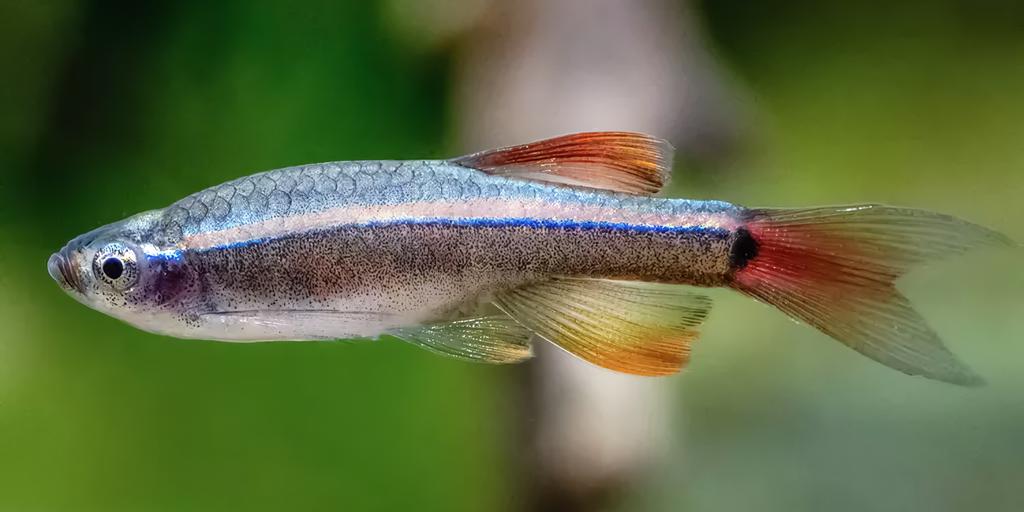
White Cloud Mountain Minnows (Tanichthys albonubes) are small, peaceful freshwater fish native to the White Cloud Mountain region in China. They are members of the carp family Cyprinidae and are known for their hardiness and striking coloration, which includes a silvery body with iridescent hues and bright red fins.
White Cloud Mountain Minnows were once believed to be extinct in the wild but were rediscovered in the late 20th century, making them a conservation success story. These fish are often referred to as "the working man's neon tetra" due to their similar appearance and lower care requirements. They are appreciated in the aquarium hobby for their active and schooling behavior, making them suitable for community tanks.
White Cloud Mountain Minnows are adaptable and thrive in a wide range of water conditions, making them an excellent choice for beginner aquarists. They are typically kept in groups, and their peaceful nature allows them to coexist with various tankmates.
White Cloud Mountain Minnows are also well-suited for outdoor ponds in temperate climates due to their ability to tolerate cooler water temperatures.
Quick Specs
Water parameters
| Temperature: | 64-72°F (18-22°C) |
| pH: | 6.0-7.5 |
| Hardness: | 5-20 dGH |
| Other: | Ammonia, Nitrites, and Nitrates should be kept at minimal levels through regular water changes and maintenance. |
| Water changes: | Regular water changes of 20-25% every 1-2 weeks help maintain water quality and promote the health of White Cloud Mountain Minnows. |
Behavior & compatibility
Schooling Behavior: White Cloud Mountain Minnows are schooling fish and do best in groups; larger groups are more active and display better behavior. White Cloud Mountain Minnow (Tanichthys albonubes) should be kept in groups (minimum 6; ideally 8–10 for best display).Temperament: Generally peaceful; occasional chasing can occur (often male sparring), but they’re not broadly regarded as a fin-nipping species.
Centrepiece: Typically not a centerpiece—more of a hardy, active schooling fish that adds motion and sparkle rather than being the main focal fish.
Prolific or Livebearing:White Cloud Mountain Minnows are egg-layers and not livebearers. They may scatter their eggs among plants in the aquarium.
Swimming zone:They primarily occupy the mid to upper water levels and are not considered bottom-dwelling fish.
Interaction with Plants:They generally interact well with live or artificial plants in the aquarium. Plants provide shelter and a natural environment.
Setup essentials
Lid: A tank cover is not strictly necessary, but it can prevent fish from jumping out and provide added security.Filter: A filter is preferred and recommended to maintain water quality by removing waste and toxins.
Substrate: White Cloud Mountain Minnows are flexible regarding substrate and can thrive with various types, including sand or fine gravel.
Lighting: While not necessary, aquarium lighting can enhance the colors of White Cloud Mountain Minnows and promote plant growth if live plants are present in the tank.
Heater: A heater is not typically required unless the tank's temperature falls below their preferred range. These minnows tolerate cooler temperatures.
Air Pump: An air pump is not necessary, but it can help improve oxygen exchange and water circulation, particularly in tanks with limited surface agitation.
Feeding Regimen
They are omnivorous and should be fed a balanced diet consisting of high-quality flakes or pellets designed for small tropical fish. Supplement their diet with occasional live or frozen foods like brine shrimp or daphnia. Feed them 2-3 times a day, only what they can consume in a few minutes.Lifespan
White Cloud Mountain Minnows have an average lifespan of 3-5 years, although with proper care, some individuals can live longer.Tank Mates
Good tank mates
Other cool-water peaceful fish and minnows; compatible bottom dwellers in suitable temperatures; great for unheated community tanks.
Avoid
Warm-water tropical-only fish (temperature mismatch), aggressive fish, and fin nippers that harass schooling minnows.
Note
Prefer cooler water; keep in groups and provide open swimming space for best activity and color.
Common problems + quick fixes
Keep them cooler than typical tropical setups; add aeration if warm.
Keep a proper group and add plants.
Improve surface agitation/oxygen when temps rise.
Interesting Facts
- White Cloud Mountain Minnows are sometimes called "Poor Man's Discus" due to their resemblance to the more expensive and demanding discus fish.
- Their rediscovery in the wild was a significant event in the world of ichthyology and conservation.
- In their natural habitat, these minnows are adapted to colder mountain streams and can tolerate temperatures close to freezing for short periods.