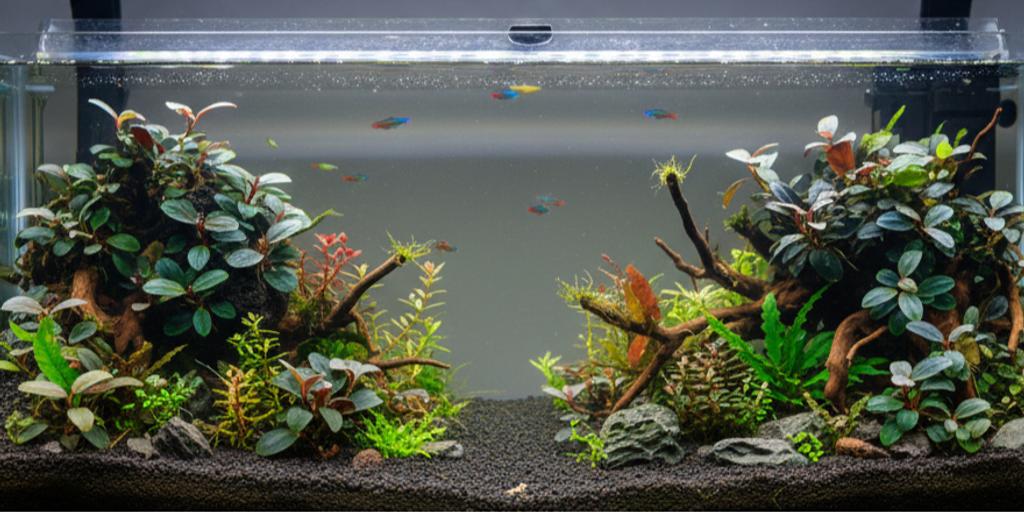
Bucephalandra is a slow-growing freshwater epiphyte plant from Borneo that’s popular in aquascaping for its compact size and unique leaf colors. It’s best attached to rocks or driftwood, where it grips with its roots while the rhizome stays above the substrate. If the rhizome is buried, it can rot, so planting it like a typical rooted stem plant is a common mistake. Buce is considered hardy once established, but it strongly prefers stable conditions and can “melt” (drop leaves) after big parameter swings or rough handling. It grows well in low to medium light and is ideal for low-tech tanks, though algae can become an issue because growth is slow. Gentle to moderate flow helps keep detritus off the leaves and supports healthier growth. Fertilizer is helpful in lean tanks, but heavy dosing isn’t required if fish load and feeding already provide nutrients. CO₂ injection is optional; it can improve growth speed and leaf size, but Buce can thrive without it. It pairs especially well with shrimp and small fish because it creates excellent grazing and hiding surfaces.
Recommended Water Parameters
70–82°F (21–28°C) is a safe and widely recommended range; stability matters more than chasing an exact number.pH: 6.0–8.0 (aim for stable conditions; slightly acidic to neutral is common in planted tanks).
Water Hardness: ~4–12 dGH is a practical range; many Buce types tolerate broader hardness if conditions are steady.
Keep ammonia and nitrite at 0, and keep nitrate controlled (avoid long periods of high nitrate). Stable parameters, clean water, and decent flow help prevent algae and leaf melt.
Water Type
Bucephalandra is a freshwater plant and is not suitable for saltwater aquariums.Water Changes
About 25–30% every 1–2 weeks works well for most Buce tanks; adjust frequency based on stocking, feeding, and nitrate trend.Aquarium Lighting
Bucephalandra thrives in low to medium light. Higher light can speed growth but often increases algae on its slow-growing leaves, so many aquascapers keep it shaded.Duration of daylight
6–8 hours/day is usually plenty; start lower if algae appears.Air Pump
An air pump is not required specifically for Bucephalandra, but gentle surface agitation can help oxygen exchange—especially at night in heavily planted tanks.Filter
A filter is preferred because Buce benefits from clean, stable water and moderate flow that keeps debris off leaves.Heater
A heater is often used to keep Bucephalandra’s temperature stable (especially in cooler rooms or winter). While Buce can tolerate a range, stability helps prevent stress and leaf “melt.”Is an additional source of CO2 needed
CO₂ injection is not required, but it can improve growth rate and overall robustness when combined with good nutrients and controlled light.Roots
It does have roots (used mainly to attach to rock/wood rather than feed heavily from substrate).Stems
It does not have true “stems” like stem plants; Bucephalandra grows from a creeping rhizome (a horizontal stem-like structure).Leaves
Leaves are typically small to medium, thick, and slow-growing, with many varieties showing green, blue, purple, or reddish tones depending on conditions.Reproduction
Reproduces mainly by dividing the rhizome—cut a healthy rhizome section with leaves/roots and attach it to hardscape to grow a new clump.Growth rates
Generally slow growth, which is why algae control (light duration, flow, clean water, grazers) is important.Lifespan
With stable care, Bucephalandra can live for years and continuously expand into larger clumps.Source of food
Not a primary food source, but it supports biofilm and microfauna that shrimp and small fish like to graze, and it provides shelter.Interesting Facts
- Many Buce varieties show different colors depending on light intensity, nutrients, and water chemistry.
- It’s famous for “melt” after major changes—often it recovers by regrowing from the rhizome if it wasn’t buried or rotted.
- Some Buce can flower (including submerged flowering) in well-established tanks.