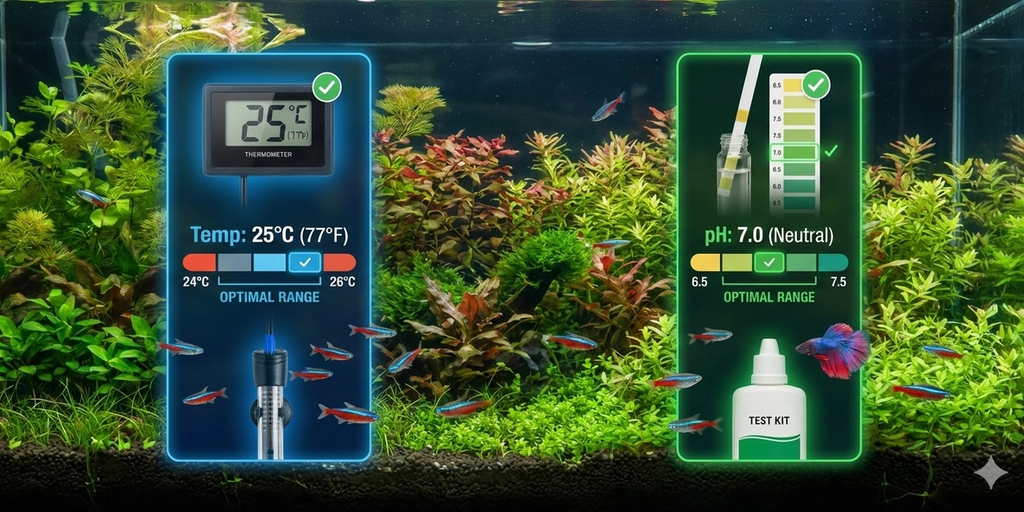
Maintaining a healthy and thriving aquarium requires careful attention to a range of factors, and two of the most critical ones are water temperature and pH levels. Creating the right environment for your aquarium fish is essential for their well-being and longevity. In this comprehensive guide, we will explore how to ensure ideal conditions for your aquatic companions.
1. Understanding Water Temperature:
- Research Your Fish Species: Different fish species come from varying natural habitats with specific temperature preferences. It's crucial to know the temperature range your fish thrive in.
- Invest in a Quality Heater: To control and maintain the water temperature within the desired range, a reliable aquarium heater is essential. Adjustable heaters are available to meet the specific needs of your fish.
- Monitor and Adjust: Regularly check the water temperature using a reliable thermometer. Make adjustments as necessary to keep it consistent, as sudden temperature fluctuations can stress your fish.
- Seasonal Considerations: Keep in mind that seasonal changes may affect the temperature in your home. Be prepared to make adjustments to the heater settings accordingly.
2. Maintaining Proper pH Levels:
- Know Your Fish's pH Tolerance: Just like with temperature, different fish species have varying pH preferences. Some prefer slightly acidic water, while others thrive in more alkaline conditions.
- Test Regularly: Invest in a pH testing kit to monitor the pH levels in your aquarium. Test the water at least once a week to ensure stability.
- Use pH Adjusters Sparingly: If your pH levels are outside the recommended range for your fish, consider using pH adjusters. However, use them sparingly and follow the product instructions closely to avoid sudden pH swings.
- Gradual Changes: When making pH adjustments, do so gradually over a period of time to avoid stressing your fish. Rapid pH fluctuations can be harmful.
Additional Tips for Maintaining a Healthy Aquarium Environment:
- Filtration: A good filtration system helps remove waste and maintain water quality. Ensure that your filter is appropriately sized for your aquarium's volume and that you clean or replace filter media regularly.
- Water Changes: Regular partial water changes, typically 10-20% of the tank volume every one to two weeks, help dilute impurities and maintain water quality.
- Aquascaping: Creating a natural and stimulating environment with plants, rocks, and hiding spots can reduce stress in your fish.
- Lighting: Choose appropriate lighting for your aquarium to support plant growth and provide a day-night cycle for your fish.
- Observation: Keep a close eye on your fish's behavior. Any sudden changes in behavior, such as lethargy or loss of appetite, could indicate water quality issues.
By paying careful attention to water temperature, pH levels, and these additional tips, you can create a thriving aquatic ecosystem for your beloved aquarium fish. Remember that consistency and regular monitoring are key to maintaining a healthy environment, and your fish will reward you with their vibrant colors and lively behavior.