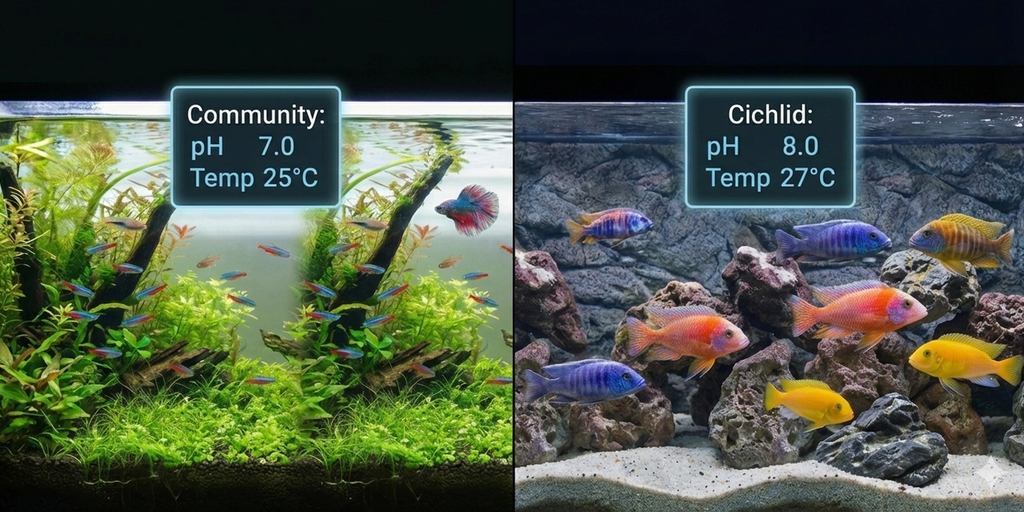
Creating a successful and harmonious aquarium environment involves more than just filling a tank with water and adding fish. It requires a deep understanding of the specific needs of your aquatic inhabitants, particularly when it comes to water parameters. The water quality in your aquarium plays a pivotal role in the health and well-being of your fish. In this extensive guide, we will explore the ideal water parameters for various types of aquarium fish.
1. Temperature:
- Tropical Fish (25-28°C or 77-82°F): Many popular aquarium fish, like tetras, angelfish, and guppies, originate from tropical regions. Maintaining a stable temperature within this range is crucial for their health and vitality.
- Coldwater Fish (10-20°C or 50-68°F): Coldwater fish, such as goldfish and some varieties of minnows, thrive in cooler temperatures. Ensure your aquarium's water stays within this range to keep them healthy.
- Tropical Freshwater and Saltwater Fish: Marine and freshwater fish from tropical climates generally require temperatures between 24-27°C (75-81°F). However, precise temperature preferences may vary by species, so research is essential.
2. pH Levels:
- Neutral pH (Around 7.0): Many common aquarium fish, including neon tetras and mollies, prefer a neutral pH level. This means the water is neither too acidic nor too alkaline.
- Acidic pH (Below 7.0): Some fish, such as tetras, angelfish, and bettas, prefer slightly acidic water. pH levels between 6.0 and 7.0 are suitable for these species.
- Alkaline pH (Above 7.0): Certain cichlids, like African rift lake species, thrive in alkaline water with a pH above 7.0.
3. Hardness (GH and KH):
- Soft Water (GH and KH Below 5): Fish from regions with soft water, like South American tetras and discus, require low general hardness (GH) and carbonate hardness (KH).
- Hard Water (GH and KH Above 10): African cichlids, which originate from the hard water of the African rift lakes, prefer higher GH and KH levels.
4. Ammonia, Nitrite, and Nitrate Levels:
- Ammonia and Nitrite (Zero Levels): Toxic ammonia and nitrite must be maintained at undetectable levels. Use proper filtration and regular water changes to achieve this.
- Nitrate (Low Levels): Nitrate should be kept low, ideally below 20 ppm (parts per million). Frequent water changes and a well-maintained biological filter help control nitrate.
5. Salinity (For Saltwater Fish):
- Specific Gravity (1.020-1.025): Marine fish require precise control of salinity. A specific gravity between 1.020 and 1.025 is suitable for most saltwater aquariums.
6. Oxygen Levels:
- Adequate Aeration: All fish, regardless of species, require sufficient oxygen levels in the water. Proper aeration and surface agitation help maintain healthy oxygen levels.
Understanding the specific requirements of your fish species is essential for their well-being. Remember that some fish may have more stringent requirements than others, so thorough research and regular water testing are critical to ensure your aquarium's water parameters remain within the ideal ranges. By doing so, you can create an environment where your fish thrive, exhibit vibrant colors, and live longer, healthier lives.