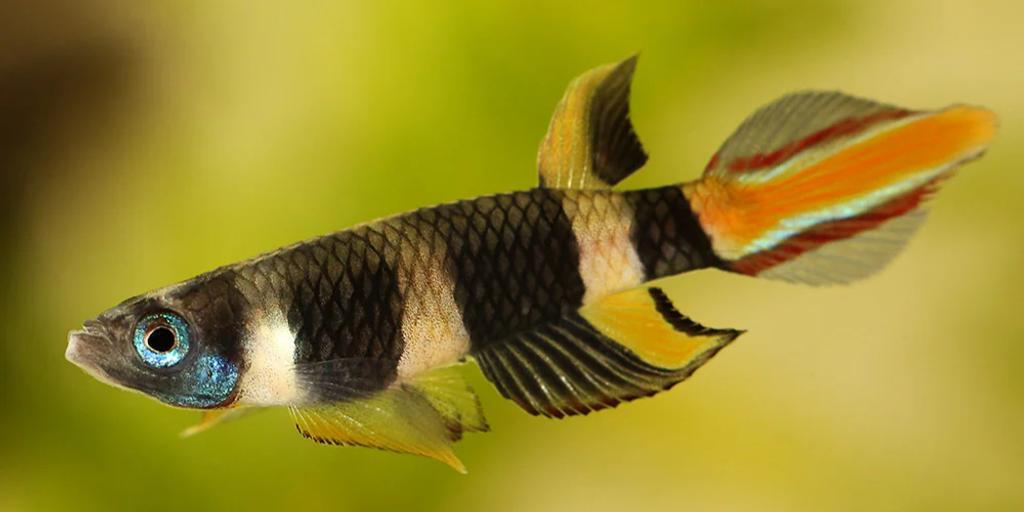
Clown Killifish (Epiplatys annulatus) is a tiny, beautifully patterned surface-dwelling fish known for its “clown” stripes and colorful tail. It is peaceful, shy, and does best in calm, well-planted aquariums with floating plants and gentle flow. This species spends most of its time near the surface, so it needs unobstructed access to the top and appreciates a tank with plenty of surface cover. A tight-fitting lid is very important because clown killifish are excellent jumpers. They thrive in stable, mature tanks and can be sensitive to poor water quality or sudden parameter changes, especially in small volumes. They are not aggressive and generally do well with other peaceful nano fish that won’t outcompete them at feeding time. Because they are slow and surface-oriented feeders, they do best with small foods offered at the surface (live/frozen foods are especially helpful). They are egg layers and may spawn in floating plants or fine-leaved plants, but fry survival is low in community tanks. In the right setup, they become a unique “nano centerpiece” at the surface with very interesting behavior.
Quick Specs
Water parameters
| Temperature: | 73–79°F (23–26°C), stable (slightly warm, not hot). |
| pH: | 6.0–7.5 (slightly acidic to neutral; stable is key). |
| Hardness: | 2–12 dGH (soft to moderately hard). |
| Other: | Ammonia and nitrites must be 0 ppm at all times; keep nitrates low (ideally under ~20 ppm). Because they live near the surface, ensure good surface cleanliness (no oily film) and stable, gentle filtration. |
| Water changes: | Change about 20–30% weekly to keep water stable. In small tanks, 15–20% twice weekly can improve stability and reduce swings. |
Behavior & compatibility
Schooling Behavior: Clown killifish do best in small groups; they may not form a tight school, but groups make them bolder and more active near the surface. Clown Killifish (Epiplatys annulatus) should be kept in groups (minimum 6; ideally 10+ for best display).Temperament: They are peaceful, not aggressive, and not fin-nippers.
Centrepiece: They can be considered a nano “centerpiece” because they occupy the surface and have striking patterns and unique behavior, especially in planted nano displays.
Prolific or Livebearing:They are egg layers (not livebearers). They may spawn regularly in planted tanks, but they are not typically prolific in community tanks because eggs/fry are eaten unless separated.
Swimming zone:They are surface-oriented fish and spend most of their time at the top.
Interaction with Plants:Excellent with plants and benefits strongly from floating plants. They use plants for cover, feel safer under shaded surface areas, and may lay eggs in fine-leaved/floating plants.
Setup essentials
Lid: A tank cover is necessary because they are very prone to jumping, especially when startled. The lid should be tight-fitting with gaps sealed.Filter: A filter is necessary. Use gentle filtration (sponge filter or low-flow HOB) to maintain water quality without creating strong current.
Substrate: Any gentle substrate works; dark sand or planted soil is preferred for a planted tank and to enhance their colors. Substrate matters less than surface cover and calm conditions.
Lighting: Moderate lighting is preferred mainly for plant growth and viewing. Floating plants help diffuse light and make them feel secure.
Heater: A heater is preferred if room temperature is unstable; it may be necessary in cooler rooms to keep 23–26°C stable.
Air Pump: An air pump is not necessary if the filter provides surface movement. Gentle aeration can be used if oxygen is low, but avoid creating strong surface turbulence (they prefer calm water).
Feeding Regimen
Feed 1–2 times per day. Prefer small foods offered at the surface: baby brine shrimp, daphnia, mosquito larvae (where safe), and high-quality micro pellets/crumbled flakes. They are slow feeders—ensure food stays near the surface long enough.Lifespan
With proper care, Clown Killifish typically live about 2–4 years.Tank Mates
Good tank mates
Tiny calm nano fish: Chili Rasboras, Phoenix rasboras, Ember Tetras (in larger tanks)
Bottom companions: Pygmy Corydoras
Algae grazers: Otocinclus (best in mature tanks)
Inverts: shrimp and snails
Avoid
Fin nippers, fast boisterous fish, aggressive gouramis/cichlids, and any species that outcompetes them at feeding time.
Note
Surface fish and slow feeder; ensure food reaches them. Use a tight lid—known jumpers.
Common problems + quick fixes
Use a tight lid—non-negotiable.
Add floating plants and keep flow gentle.
Start with frozen/live foods, then gradually mix in tiny pellets.
Interesting Facts
Clown Killifish are famous jumpers—many losses happen from tiny lid gaps, so a tight cover is critical. Their tail is often described as a “little rocket flame,” and males may display near the surface among floating plants. In calm, shaded tanks with floating plant cover, they become much bolder and more visible.